


Glaw Lake Declared Arunachal Pradesh’s First Ramsar Site
Why in News?
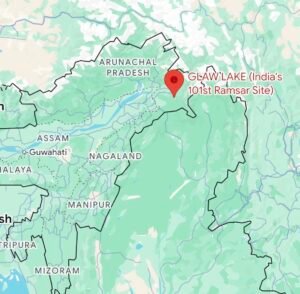
Glaw Lake has been included in the list of Ramsar Sites, becoming the first wetland in Arunachal Pradesh to receive international recognition under the Ramsar Convention.
Key Highlights
- Glaw Lake is a freshwater wetland located in Lohit district within the Kamlang Tiger Reserve and Wildlife Sanctuary in the ecologically significant Eastern Himalayan region.
- The Kamlang River flows to the north of the lake, enhancing its hydrological and ecological importance.
- The lake has also been recognised as an Important Bird and Biodiversity Area (IBA) owing to its rich diversity of bird species and unique ecosystem.
- It provides habitat to four major big cat species : Tiger, Leopard, Clouded Leopard and Snow Leopard reflecting its exceptional conservation value.
- The wetland serves as a crucial habitat and wintering ground for the Critically Endangered White-bellied Heron, besides supporting species such as the Great Hornbill, Hoolock Gibbon, Asian Golden Cat, Asiatic Black Bear, and Barking Deer.
- Beyond its ecological significance, Glaw Lake is revered as a sacred site by the indigenous Mishmi community, highlighting its cultural importance.
Key Concepts
Ramsar Site:
A wetland recognised under the Ramsar Convention for its international ecological significance and the commitment to its conservation and sustainable use.
Important Bird and Biodiversity Area (IBA):
A site identified using globally accepted scientific criteria for its importance in conserving bird populations and overall biodiversity.
Way Forward
Protecting Glaw Lake requires integrated wetland management, conservation of wildlife habitats, participation of local indigenous communities, sustainable tourism practices, and continuous ecological monitoring to preserve its biodiversity and cultural heritage for future generations.