


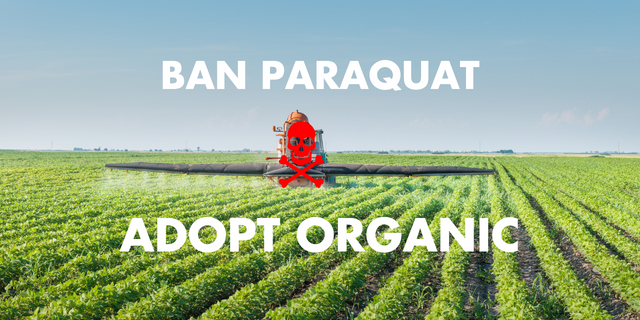
The human cost of a deadly weed killer: banning of paraquat in Telangana
Context :
In March, Telangana banned paraquat, one of the world’s most widely used and highly toxic weedicides, becoming only the third State in India to do so. The herbicide is responsible for hundreds of deaths each year, most of them by taking their own lives, and some accidental.
Prelims :
- Paraquat is a highly toxic, fast-acting chemical herbicide used to eliminate unwanted vegetation. As a non-selective weed killer, it destroys almost all green plant matter it comes into contact with by damaging plant cells, making it widely used for rapid land clearing despite its serious health hazards.
Origin and Historical Development
- Initial Discovery: Paraquat was first synthesized during the 1880s and was initially used for industrial purposes, particularly as an oxidation indicator and dye-related chemical.
- Recognition as a Herbicide: Scientists discovered its weed-killing properties in the 1950s, paving the way for its agricultural application.
- Commercial Introduction: The chemical was commercially launched worldwide in the 1960s by Imperial Chemical Industries (ICI) under the trade name Gramoxone.
- Global and Indian Usage: Owing to its affordability, around 80 lakh acres of farmland in India use Paraquat. However, concerns over its extreme toxicity have led to its prohibition in 74 countries.
Key Technical and Chemical Features
- Colorless and Nearly Tasteless Nature: In its pure form, Paraquat is a colorless, odorless, and almost tasteless liquid. This increases the risk of accidental poisoning when stored in unmarked household containers or beverage bottles.
- Fast-Acting Cellular Damage: It works by producing reactive oxygen species within plant cells during photosynthesis, rapidly destroying cell membranes and causing weeds to dry out within a short period.
- No Available Antidote: Unlike many other forms of poisoning, there is currently no specific antidote for Paraquat exposure. Once it enters the body, the resulting cellular damage begins immediately and cannot be reversed.
- Severe Multi-Organ Toxicity: Even a small amount can cause severe burns to the mouth and throat, commonly referred to as “Paraquat Mouth.”
- Progressive Lung Scarring: Paraquat accumulates in lung tissue and triggers irreversible pulmonary fibrosis.