


Tribal Women Lead Protests Against Ken-Betwa River Linking Project
Context
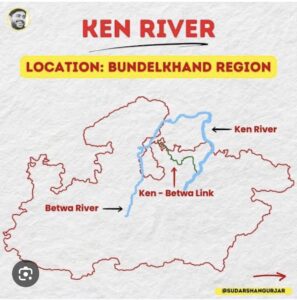
Tribal communities in Madhya Pradesh have intensified protests against the Ken-Betwa River Linking Project, demanding fair compensation, stronger rehabilitation measures, and protection of their livelihoods from project-induced displacement.
Facts
- Tribal women have taken the lead in demonstrations opposing displacement caused by the Ken-Betwa River Linking Project and related irrigation infrastructure, citing inadequate rehabilitation and resettlement provisions.
- Protesters have sought compensation and rehabilitation packages similar to those provided under the Mahigaon and Runj irrigation projects.
- In response, the Madhya Pradesh Government enhanced the rehabilitation package to nearly ₹12.5 lakh per affected family and increased project-related allocations. However, local communities continue to demand stronger safeguards and effective implementation.
- Environmental groups have expressed concerns over the project’s likely impact on forests, wildlife habitats, and the Panna Tiger Reserve ecosystem.
Key Concepts
- The Right to Fair Compensation and Transparency in Land Acquisition, Rehabilitation and Resettlement Act, 2013 mandates fair compensation, rehabilitation, and livelihood restoration for people displaced by development projects.
- River interlinking projects must strike a balance between water security objectives, ecological sustainability, and the protection of tribal rights.
- Free, Prior and Informed Consent (FPIC) and participatory decision-making are increasingly recognised as essential principles for projects affecting indigenous communities.
- A comprehensive Environmental Impact Assessment (EIA) is crucial to evaluate ecological, biodiversity, forest, and socio-economic impacts before project implementation.
Way Forward
- Ensure strict implementation of the Forest Rights Act, 2006, PESA Act, 1996, and other biodiversity conservation safeguards while executing the project.
- Promote integrated river basin management that balances developmental needs with ecological conservation and the rights and welfare of tribal communities.