


Rayalaseema’s Emergence as a Major Industrial Hub
Context
- Traditionally known as one of India’s most drought-prone regions, Rayalaseema in Andhra Pradesh is witnessing rapid industrial transformation through targeted investments, improved infrastructure and proactive policy support.
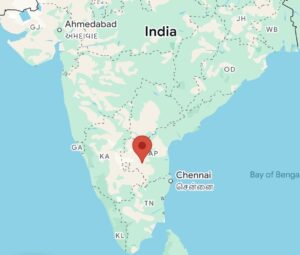
- The region is emerging as an important manufacturing destination despite its historical climatic constraints.
Key Highlights
- Several large-scale industrial projects are being established, including JSW’s integrated steel plant in Kadapa, automobile manufacturing facilities of KIA Motors and Royal Enfield, along with defence-related investments involving DRDO’s AMCA programme, Bharat Forge and HFCL.
- The government has also proposed the development of a Space City near Sriharikota, India’s premier space launch centre.
- Industrial growth has been driven by a shift from merely ensuring ‘ease of doing business’ to enabling ‘speed of doing business’ through faster approvals and investment facilitation.
- Rayalaseema’s dry climate is primarily attributed to its location in the rain-shadow region of the Deccan Plateau, which has historically limited agricultural development.
Key Concepts
Rain-Shadow Region
- The leeward side of a mountain or plateau that receives significantly lower rainfall because moisture-laden winds lose most of their moisture on the windward side.
- Rayalaseema’s chronic drought conditions are largely explained by this geographical phenomenon.
Location Factors of Industries
- Factors influencing industrial location include availability of land, infrastructure, transport connectivity, investment incentives, skilled labour, markets and supportive governance.
AMCA (Advanced Medium Combat Aircraft)
- India’s proposed indigenous fifth-generation stealth fighter aircraft being developed to strengthen domestic defence capabilities.
Ease of Doing Business
- A policy framework aimed at simplifying regulations, reducing procedural delays and creating a business-friendly environment to encourage industrial investment.
Way Forward
- Promote balanced regional development by using industrial clusters to generate employment and economic growth in historically underdeveloped regions.
- Complement industrial expansion with sustainable water management, skill development initiatives and robust environmental safeguards.
- Strengthen logistics, urban infrastructure and innovation ecosystems to ensure long-term industrial competitiveness.
- Encourage responsible industrialisation that balances economic growth with ecological sustainability and resource conservation.