


Northern Goshawk (Accipiter gentilis)
Context
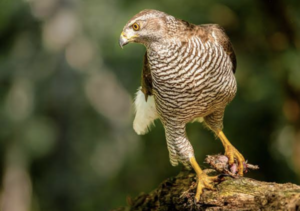
The Northern Goshawk, locally known as “Baaz”, was recently sighted in Punjab. It holds particular cultural significance in the state due to its historical association with Guru Gobind Singh.
Key Facts
- Physical Features: A medium to large raptor exhibiting pronounced sexual dimorphism, with females considerably larger and sometimes nearly twice the weight of males.
- Habitat: Prefers mature coniferous and deciduous forests, using dense canopies for nesting and relatively open understories for hunting.
- Distribution: Found across the temperate Northern Hemisphere, including parts of northern Asia and North America. In India, it occurs mainly in the high altitude Himalayas and moves towards the lower Himalayan foothills during winter.
- Diet: An opportunistic predator that primarily hunts medium sized birds such as grouse and crows, along with small mammals including squirrels and hares.
- Behaviour: Generally territorial, solitary and elusive, it is known for swift and agile flight, enabling it to pursue prey through dense vegetation.
- Ecological Significance: As a high level avian predator, it plays an important role in maintaining ecosystem balance and can serve as an indicator of forest health and biodiversity.
Conservation Status
- IUCN: Least Concern (LC)
- CITES: Appendix II
- Wildlife Protection Act, 1972: Schedule I