


Siang Upper Hydropower Project: India China River Security and Tribal Consent
Context
Protests have continued in Arunachal Pradesh over the preliminary feasibility work for the proposed 11,200-MW Siang Upper Multipurpose Project. Concerns primarily relate to the possible submergence of land and the loss of livelihoods. The project’s strategic significance is also linked to China’s upstream activities on the Yarlung Tsangpo River.
Key Highlights
- Local opposition: Protesters have challenged survey activities, while reports of detentions have further heightened tensions surrounding the project.
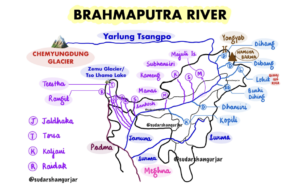
- Transboundary river system: The project concerns the Siang River, which flows downstream into Assam, where it is known as the Brahmaputra.
- Environmental and social concerns: The reported project design involves a massive dam and storage reservoir, raising concerns about ecological impacts, displacement and local livelihoods.
- Cross border water security: Risks associated with upstream river projects need to be assessed using reliable information rather than unverified assumptions about China’s proposed project.
Key Concepts
- Yarlung Tsangpo Siang Brahmaputra River System
This is a transboundary river system that flows through different geographical regions under different names. It is known as the Yarlung Tsangpo in Tibet, the Siang or Dihang in Arunachal Pradesh, and the Brahmaputra in Assam.
- Run of the River Hydropower
Run of the river hydropower generates electricity by utilising the natural flow of a river, generally requiring less water storage than projects based on large reservoirs.
- Free, Prior and Informed Consent (FPIC)
FPIC is a rights based principle that emphasises the need to adequately inform Indigenous communities and involve them in decisions affecting their lands, resources and livelihoods before such decisions are made.
- Cumulative Impact Assessment
A cumulative impact assessment evaluates the combined environmental and social consequences of multiple projects within a river basin, rather than examining the effects of an individual dam in isolation.
Way Forward
- Comprehensive assessments: Conduct credible environmental and seismic studies across the entire river basin to evaluate potential risks.
- Community consultation: Engage affected Adi and other local communities in meaningful consultations and ensure transparent rehabilitation and resettlement plans.
- Cross border cooperation: Improve the exchange of upstream hydrological data, strengthen early warning mechanisms and promote diplomatic dialogue on shared river systems.
- Sustainable development: Balance hydropower generation and strategic interests with ecological protection, disaster preparedness and the rights of local communities.