


Bird Islands
Context
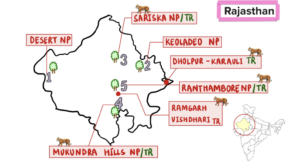
Two captive bred Great Indian Bustards (GIBs) were released into the wild at Desert National Park, Rajasthan, marking an important development in India’s efforts to conserve one of the country’s most threatened bird species. The initiative also highlights the importance of moving beyond species focused measures towards habitat based conservation.
Key Highlights
- The Great Indian Bustard is critically endangered, with only around 120 individuals remaining in the wild. This makes habitat protection and population recovery important conservation priorities.
- The species faces several threats, including overhead power transmission lines, habitat degradation, conversion of grasslands, expansion of agriculture and shrinking suitable breeding grounds.
- The Supreme Court’s intervention concerning overhead power lines in important GIB habitats underlines the need to balance renewable energy infrastructure with biodiversity conservation.
- India has undertaken captive breeding and reintroduction programmes for the species. However, captive breeding cannot deliver long term results unless suitable grassland habitats are restored and protected.
- Conservation efforts need to move from a narrow species specific approach towards landscape level conservation, recognising grasslands as valuable ecosystems rather than treating them as wastelands.
Way Forward
A comprehensive conservation strategy should integrate captive breeding with habitat restoration, grassland protection, wildlife corridors and measures to reduce bird collisions with power lines. Protecting suitable habitats will be essential for released birds to establish sustainable populations in the wild.