


Declining Camel Population in Kutch: Threats to Traditional Livelihoods and Grassland Habitats
Context
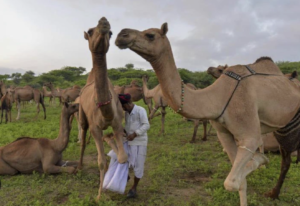
Kutch district in Gujarat, once recognised for its substantial camel population, is experiencing a sharp decline in camel numbers. Industrial expansion, mining activities, shrinking grazing lands and habitat degradation have emerged as major factors affecting traditional camel-rearing practices.
Key Highlights
- Kutch, the largest district in India by area, historically supported thousands of camels that played an important role in the livelihoods and cultural traditions of pastoral communities.
- According to the article, the camel population declined from 17,639 in the 1992 Census to 497 in the 2019 Census, indicating a substantial demographic reduction.
- Industrialisation, mining activities, solar and wind energy projects, and the diversion of grazing lands have reduced the availability of traditional habitats for camels.
- The spread of the invasive species Prosopis juliflora has further degraded grasslands and reduced the availability of suitable fodder.
- Restrictions on free grazing, declining economic returns from camel milk and limited access to markets have weakened the financial incentives associated with traditional camel rearing.
Key Concepts
- Kutch: The largest district in India by geographical area, located in Gujarat. It is known for its distinctive landscape, grasslands and pastoral communities.
- Pastoral Communities: Communities whose livelihoods traditionally depend on livestock rearing and the utilisation of grazing resources.
- Prosopis juliflora: An invasive plant species that can alter grassland ecosystems and affect the availability of suitable fodder.
- Habitat Degradation: The deterioration of natural habitats due to human activities, reducing their ability to support wildlife and livestock.
- Traditional Camel Rearing: A livestock based livelihood system practised by pastoral communities, contributing to their economic activities and cultural heritage.
Way Forward
- Protect and restore traditional camel-grazing areas by regulating land use changes and minimising habitat fragmentation.
- Ensure that industrial, mining and renewable energy projects account for the ecological requirements of pastoral communities.
- Promote sustainable grassland management and control the spread of invasive species such as Prosopis juliflora.
- Improve market access and economic incentives for camel milk and other camel based products to support traditional livelihoods.
- Strengthen conservation initiatives through community participation and the protection of indigenous livestock-rearing practices.