


Flamingos
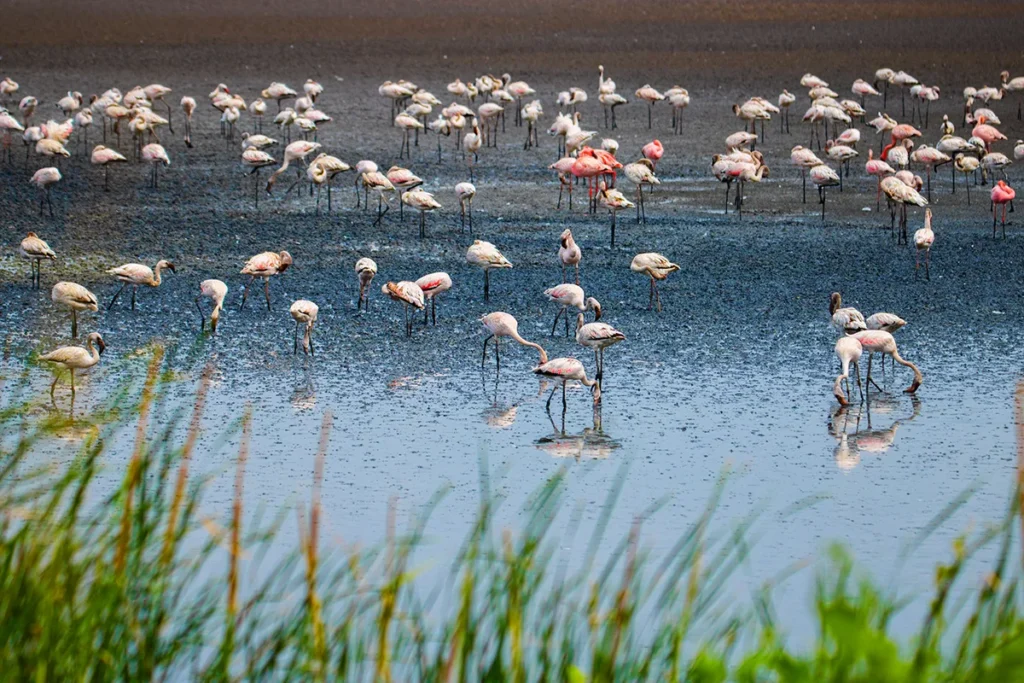
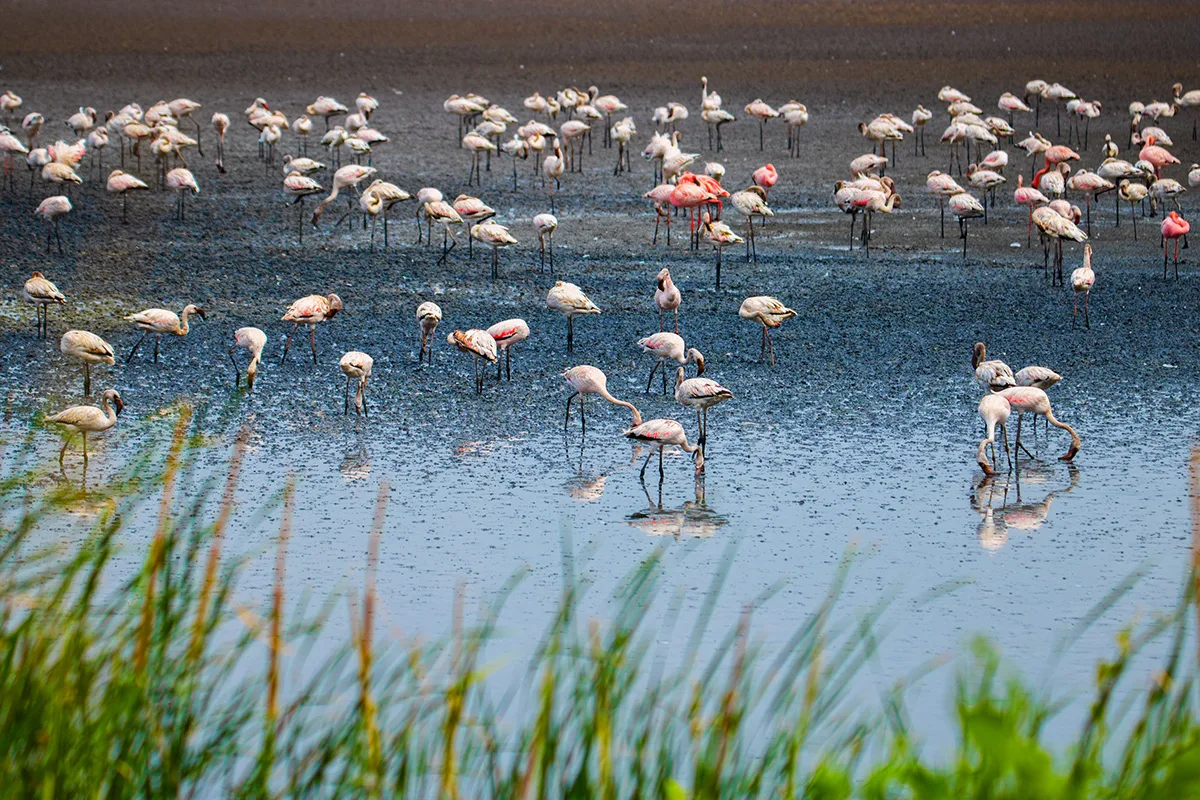
Context : Large flocks of migratory flamingos have turned the coastal salt pans of Thoothukudi, Tamil Nadu, into a vibrant feeding and resting habitat.
Prelims :
-
- Flamingos are tall, social wading birds belonging to the family Phoenicopteridae, the only family within the order Phoenicopteriformes. Known for their strong flocking behaviour, they often gather in large colonies ranging from a few hundred individuals to several lakh birds for feeding, breeding, and migration.
- Flamingos are commonly found in shallow saline and alkaline water bodies, including coastal salt pans, tidal mudflats, mangrove wetlands, lagoons, and inland soda lakes across tropical and subtropical regions.
- India is home to two regularly occurring species, the Greater Flamingo (Phoenicopterus roseus) and the Lesser Flamingo (Phoeniconaias minor). These birds migrate from their major breeding sites in the Rann of Kachchh in Gujarat to wintering areas along the southern coast of Tamil Nadu, including Thoothukudi, Tirunelveli, and Kanyakumari.
- To provide greater protection to migratory flamingos and their habitats, the Tamil Nadu government has designated Dhanushkodi as a flamingo sanctuary, helping reduce disturbances from urban activities and festive celebrations.
- Conservation Status:
- Lesser Flamingo (Phoeniconaias minor): Near Threatened (IUCN Red List)
- Greater Flamingo (Phoenicopterus roseus): Least Concern (IUCN Red List)
- Key Characteristics:
- Pink Colouration and Diet: Flamingo chicks hatch with greyish-white plumage and gradually acquire their characteristic pink colour. This coloration comes from carotenoid pigments present in algae, crustaceans, diatoms, and other small aquatic organisms that form their diet.
- Specialized Feeding Mechanism: Flamingos feed by submerging their curved bills upside down in shallow water while stirring the sediment with their feet. Fine comb-like structures inside the bill separate food particles from water and mud.
- Distinctive Flight and Resting Behaviour: While flying, flamingos stretch both their necks and legs outward, creating a recognizable silhouette highlighted by dark wing markings. They are also known for standing on one leg, a posture believed to help conserve body heat and energy.
- Mud Nest Construction: During the breeding season, flamingos build raised cone-shaped nests from mud in shallow wetlands to keep their eggs above water level. Both parents share incubation duties and later feed their chicks with nutrient-rich regurgitated food.