


Indian Social Spider (Stegodyphus sarasinorum)
- Research significance: Indian researchers have published the first molecular profile of the venom gland of Stegodyphus sarasinorum, identifying several molecules with promising antimicrobial and anti-cancer properties.
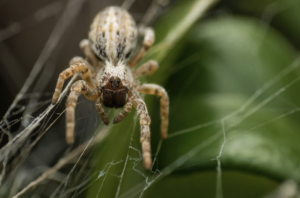
- Common names: The species is commonly referred to as the Indian cooperative spider, Indian social spider, or velvet spider.
- Social behaviour: Unlike the predominantly solitary nature of most spiders, S. sarasinorum lives in permanent colonies. It is one of fewer than 25 spider species worldwide known to exhibit truly social behaviour.
- Nest building: These spiders construct strong, interconnected silk nests using leaves, twigs, and remains of prey. Their colonies are typically female dominated, with larger, ash coloured females considerably outnumbering the smaller, darker males.
- Distribution: The species is native to South and Southeast Asia, with populations reported from India, Sri Lanka, Nepal, and Myanmar. In India, it is primarily associated with semi arid regions of central and southern parts of the country.