


Mansbal Lake Sees the Return of Migratory Birds
Why in News?
Mansbal Lake in Jammu and Kashmir has once again become a wintering ground for migratory birds, reflecting the success of recent wetland restoration and conservation initiatives.
Key Highlights
- Restoration efforts at Mansbal Lake, including dredging, desiltation, removal of excessive aquatic vegetation and improved water management, have significantly enhanced the lake’s ecological health.
- The improved habitat has led to the return of several migratory bird species, indicating better water quality and ecosystem resilience.
- Authorities have adopted scientific water budgeting, pollution control measures and integrated solid waste management to sustain the lake’s carrying capacity and ecological balance.
- The lake has recorded sightings of several migratory birds, including the Horned Grebe and Long-eared Owl, while historically it has supported over 46 bird species belonging to 23 families.
- Notable bird species associated with Mansbal Lake include the Mallard, White-headed Duck, Eurasian Hoopoe, Eurasian Collared Dove, Lesser Pied Kingfisher, Golden Eagle, Grey-backed Shrike and Tickell’s Thrush.
- The revival of the lake highlights the importance of wetland restoration in conserving biodiversity, supporting migratory birds and strengthening ecosystem services.
Key Concepts
Mansbal Lake
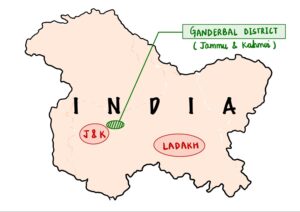
- The deepest freshwater lake in Jammu and Kashmir, situated in Ganderbal district.
- It serves as an important freshwater wetland and habitat for both resident and migratory birds.
Fig. Mansbal Lake
Wetlands
- Water-rich ecosystems that support diverse flora and fauna.
- They play a vital role in flood control, groundwater recharge, carbon storage and water purification.
Central Asian Flyway (CAF)
- A major migratory route linking breeding grounds in Central Asia with wintering habitats in South Asia.
- India lies along this flyway, making its wetlands critical stopover and wintering sites for migratory birds.
Water Budgeting
- A scientific method of assessing water inflows, outflows and storage to ensure sustainable management of freshwater ecosystems.
Wetlands (Conservation and Management) Rules, 2017
- A regulatory framework that provides for the conservation, protection and sustainable management of wetlands across India.