


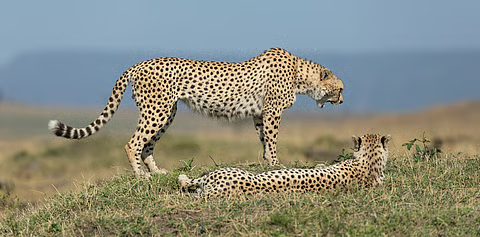
Project Cheetah: Prey Base Assessment in Kuno National Park
Context
A recent assessment under Project Cheetah found that goats and cattle together constitute nearly half of the prey consumed by cheetahs in Kuno National Park. The findings suggest that despite improvements in wild prey availability, an inadequate natural prey base in certain areas continues to drive cheetahs towards livestock.
Facts
- The assessment revealed that domestic livestock, particularly goats and cattle, account for nearly 50% of recorded cheetah kills, while chital contribute around 42%, indicating significant dependence on livestock.
- Although the core areas of Kuno National Park support a relatively healthy prey population, prey density remains lower in adjoining territorial forests where cheetahs frequently move.
- Increased movement of cheetahs into areas with human settlements and grazing livestock has heightened the risk of human–wildlife conflict.
- The report recommends habitat improvement, restoration of wild prey populations, better livestock management, community participation, and conflict mitigation strategies to ensure the long-term success of Project Cheetah and establish a sustainable free-ranging cheetah population in India.
Project Cheetah
- Project Cheetah is India’s flagship wildlife reintroduction initiative aimed at establishing a free-ranging population of African cheetahs after the species became locally extinct in India in 1952.
- The programme seeks to restore grassland ecosystems, enhance biodiversity, and improve ecological balance through scientific conservation and long-term habitat management.
Prey Base
- Prey base refers to the availability, diversity, and density of wild prey species that provide food for carnivores within an ecosystem.
- A healthy prey base is essential for sustaining predator populations, reducing dependence on livestock, minimising human–wildlife conflict, and maintaining ecological stability.