


Securing the Strait of Bab-el-Mandeb
Why in News?
Amid rising geopolitical tensions in West Asia, strategic experts have called for greater maritime security cooperation to ensure the uninterrupted movement of commercial shipping through the Bab-el-Mandeb Strait.
Key Highlights
- Escalating instability in West Asia has heightened concerns over the security of shipping routes passing through the Red Sea and the Bab-el-Mandeb Strait.
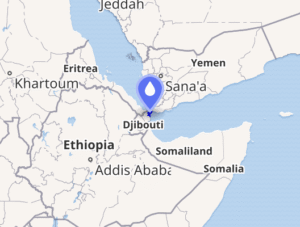
- The Strait serves as a crucial maritime chokepoint, linking the Red Sea with the Gulf of Aden and the Indian Ocean, making it vital for global trade.
- Any disruption to navigation could adversely impact India’s energy imports, trade, supply chains and the safety of Indian seafarers.
- Experts have advocated stronger naval cooperation and maritime partnerships with like-minded countries to safeguard freedom of navigation.
- The developments underline the importance of India’s SAGAR vision and its broader Indo-Pacific maritime security strategy.
Key Concepts
Bab-el-Mandeb Strait
- A strategically significant sea passage located between Yemen and the Horn of Africa.
- Connects the Red Sea with the Gulf of Aden and facilitates a substantial share of global trade and energy transportation.
Maritime Chokepoint
- A narrow sea route through which a large volume of international shipping passes.
- Such passages hold immense strategic importance for global commerce, energy security and naval operations.
Freedom of Navigation
- A principle recognised under the United Nations Convention on the Law of the Sea (UNCLOS).
- Ensures that vessels of all nations can navigate international waters without unlawful restrictions.
SAGAR (Security and Growth for All in the Region)
- India’s maritime vision aimed at promoting regional security, sustainable development, disaster response, capacity building and cooperative maritime governance across the Indian Ocean Region.
Way Forward
- Strengthen maritime cooperation with regional and like-minded partners to secure critical sea lanes.
- Enhance naval presence and maritime domain awareness in the Indian Ocean Region.
- Promote adherence to a rules-based maritime order and international law.
- Improve coordination for safeguarding commercial shipping and ensuring uninterrupted maritime trade.
- Reinforce India’s maritime security strategy to protect energy supply chains and strategic interests.