


Supreme Court Refuses Further Extension to Aravalli Panel
Context
The Supreme Court declined to grant another six month extension to its expert committee examining the need for a uniform definition of the Aravalli Range and recommending measures to regulate future mining activities. The Court directed the panel to submit its final report by November 30.
Key Highlights
- The expert committee is examining the need for a uniform ecological and geographical definition of the Aravalli Range. Differences in how the range is identified can create regulatory gaps and facilitate environmentally harmful activities, including mining.
- The Supreme Court has directed the committee to submit interim reports on urgent matters instead of waiting for the final report, enabling timely judicial intervention in cases involving ecological degradation or illegal mining.
- The Court has also emphasised the concerns of tribal communities in Rajasthan and Gujarat, underlining the need for environmental governance to consider their livelihoods, customary rights and socio economic interests.
- The Aravalli Range has major ecological significance. It acts as a natural barrier against desertification, contributes to groundwater recharge, supports biodiversity and influences the environmental conditions of the Delhi-NCR and surrounding regions.
- The case highlights the judiciary’s growing role in environmental governance, including the use of expert committees, continuing mandamus and monitoring mechanisms where conventional administrative measures have not been sufficient to protect ecologically sensitive areas.
Key Concepts
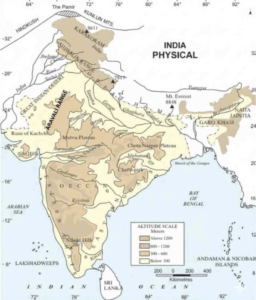
- Aravalli Range: One of the world’s oldest fold mountain systems, extending across Gujarat, Rajasthan, Haryana and Delhi. It is important for biodiversity conservation, groundwater recharge and limiting the eastward expansion of the Thar Desert.
- Environmental Constitutionalism: An approach to constitutional interpretation that integrates environmental protection with fundamental rights, state responsibilities and governance, particularly through Articles 21, 48A and 51A(g).
- Ecological Sensitivity: The degree to which an ecosystem is vulnerable to environmental disturbance. Ecologically sensitive areas require stronger regulatory safeguards against activities such as mining, construction and other forms of land use change.
Way Forward
A scientifically robust and uniform definition of the Aravalli Range should be accompanied by strict regulation of mining, satellite based ecological monitoring, meaningful community participation and coordinated action among Rajasthan, Haryana, Gujarat and Delhi. Such an integrated approach is essential for protecting the Aravalli landscape and ensuring its long-term ecological sustainability.