


Dust is Easiest to Clean, Time to Do it is Now
What Happened
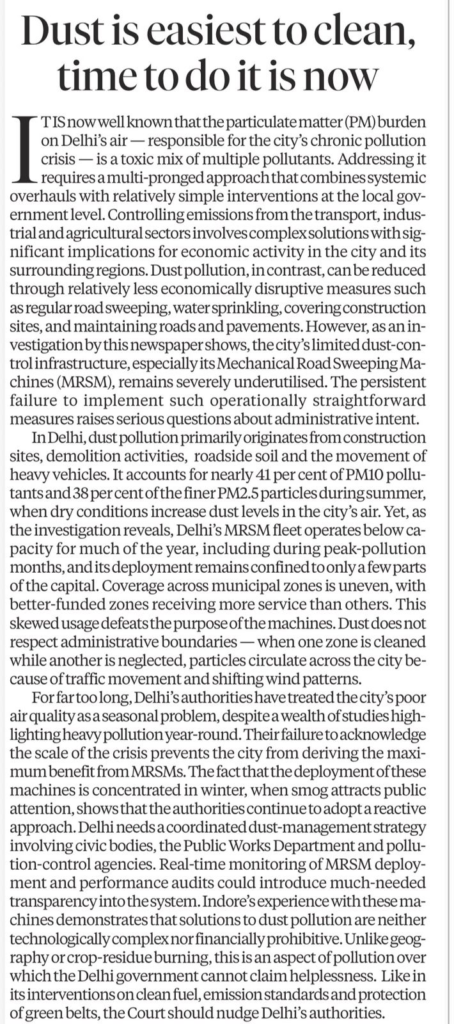
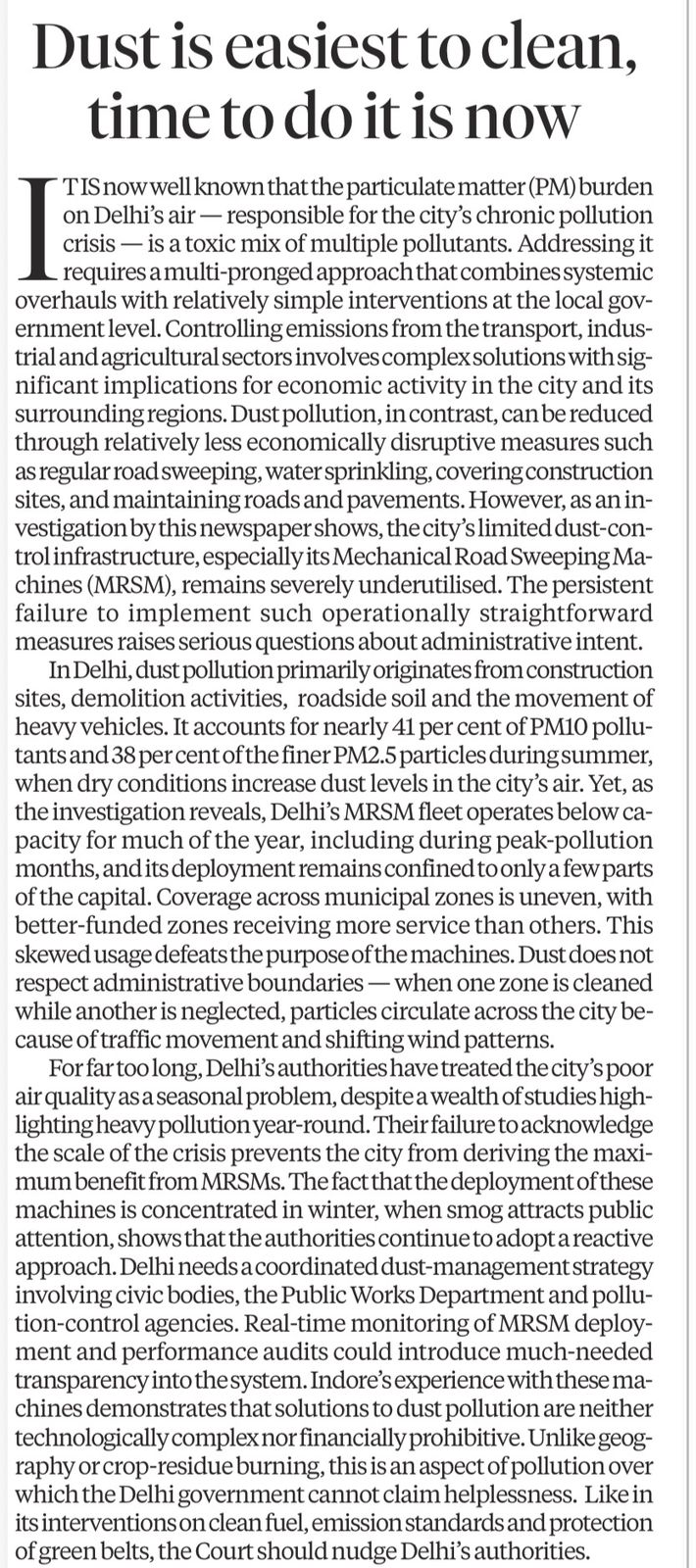
The article highlights that dust pollution remains a major contributor to Delhi’s air pollution crisis and argues that relatively simple administrative interventions can significantly reduce particulate matter levels if implemented effectively.
Key Highlights
- Particulate Matter (PM) pollution in Delhi is a toxic mix of pollutants originating from transport, industrial, agricultural and dust-related sources.
- Dust pollution can be reduced through comparatively less economically disruptive measures such as:
- Regular road sweeping
- Water sprinkling
- Covering construction sites
- Maintenance of roads and pavements
- Mechanical Road Sweeping Machines (MRSMs) in Delhi remain severely underutilised despite their importance in dust control.
- Dust pollution in Delhi mainly originates from:
- Construction activities
- Demolition activities
- Roadside soil
- Movement of heavy vehicles
- Dust contributes nearly:
- 41% of PM10 pollutants
- 38% of PM2.5 particles during summer months
- Uneven deployment of MRSMs across municipal zones weakens the effectiveness of dust-control measures.
- The article argues that Delhi’s authorities continue to adopt a reactive approach by concentrating dust-management efforts mainly during winter pollution episodes.
- The article recommends a coordinated dust-management strategy involving:
- Civic bodies
- Public Works Department
- Pollution-control agencies
- Real-time monitoring and performance audits of MRSM deployment are suggested to improve transparency and accountability.
- The article cites Indore’s experience to argue that dust-control solutions are neither technologically complex nor financially prohibitive.
Key Facts
- Dust pollution is a significant contributor to Delhi’s chronic air pollution problem.
- Dry summer conditions increase dust levels in the city’s atmosphere.
- Dust particles can circulate across municipal zones due to traffic movement and changing wind patterns.
- The article distinguishes dust pollution from geographically driven issues such as crop-residue burning.