


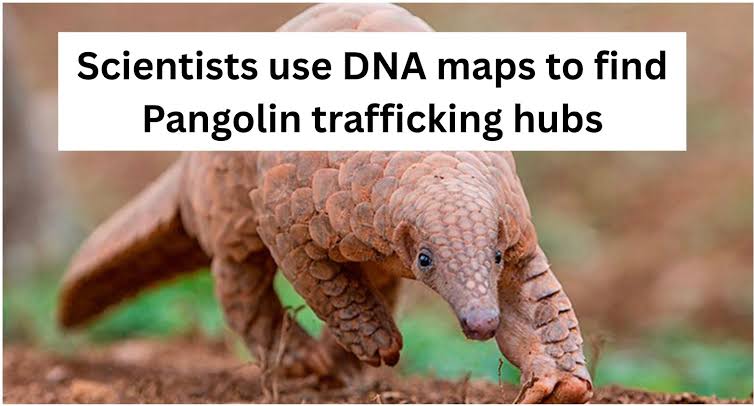
Scientists Use DNA Maps to Find Pangolin Trafficking Hubs
Context : Scientists used DNA sequencing and genetic mapping to identify pangolin trafficking routes and hubs.
Key Highlights:
- Genomic maps help identify origins of trafficked pangolins.
- Pangolin trafficking is linked with transnational criminal networks.
- Wildlife forensics improves identification of poaching hotspots.
- India’s northeast region was identified as a trafficking corridor.
Key Facts:
- Pangolins are among the most trafficked mammals globally.
- India is home to Indian Pangolin and Chinese Pangolin species.
- On the IUCN Red List, the Indian Pangolin is classified as Endangered, and the Chinese Pangolin is classified as Critically Endangered.
- Pangolins are protected under Schedule I of Wildlife Protection Act, 1972.
- All pangolin species are listed under Appendix I of CITES.