


LNG Imports Rise as India Diversifies Supply Sources Amid Hormuz Disruptions
Why in News?
India witnessed a notable rise in Liquefied Natural Gas (LNG) imports from the United States, Nigeria, and Oman as disruptions around the Strait of Hormuz affected supplies from the Gulf region. The shift reflects India’s efforts to ensure uninterrupted energy availability amid geopolitical uncertainties.
Key Highlights
- India successfully cushioned the impact of supply disruptions by sourcing LNG from a wider range of exporting countries.
- The United States accounted for the largest increase in LNG supplies to India, followed by Nigeria and Oman.
- Expanding the supplier base has reduced India’s reliance on any single region, thereby improving energy security and supply resilience.
- The development underlines the strategic importance of diversifying energy imports to withstand geopolitical shocks.
- It also highlights the vulnerability of global energy trade to conflicts and disruptions at major maritime chokepoints such as the Strait of Hormuz.
Key Concepts
Liquefied Natural Gas (LNG):
LNG is natural gas that is cooled to approximately 162°C, converting it into liquid form. This significantly reduces its volume, making it easier and more cost-effective to store and transport over long distances through specialised LNG carriers.
Strait of Hormuz:
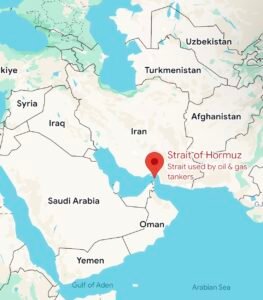
The Strait of Hormuz is a strategically important maritime passage connecting the Persian Gulf with the Gulf of Oman. A substantial share of global crude oil and LNG shipments passes through this narrow waterway, making it one of the world’s most critical energy chokepoints.
Energy Security:
Energy security refers to a country’s ability to ensure a reliable, affordable, and uninterrupted supply of energy by maintaining diversified sources and reducing vulnerability to geopolitical tensions, market volatility, or supply disruptions.
Way Forward
India should continue expanding its network of LNG suppliers, strengthen long-term energy partnerships, develop strategic gas infrastructure, and enhance storage and regasification capacity. Such measures will improve the country’s resilience against future global supply disruptions while ensuring long-term energy security.