


Dung Beetles Prefer Dog Dung, but Their Offspring Pay the Price
Context
A recent study has found that dung beetles prefer dog dung over herbivore dung, yet their larvae and pupae show higher mortality when developing in dog dung. This may be linked to the presence of antiparasitic veterinary medicines that are excreted through the faeces of treated dogs.
Key Highlights
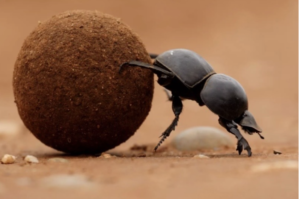
- Dung beetles are important ecosystem engineers that feed on animal dung, bury it in the soil and contribute to nutrient cycling, soil enrichment and ecosystem functioning.
- The study found that while adult dung beetles preferred dog dung, their offspring showed better survival and development in dung produced by herbivorous mammals.
- The increased mortality of larvae and pupae in dog dung may be associated with antiparasitic medicines administered to dogs, which can persist in and accumulate in their faeces.
- The findings demonstrate that veterinary medicines can have unintended ecological impacts after being excreted into the environment.
- Such effects can extend beyond dung beetles, potentially influencing insect populations, nutrient cycling and wider ecosystem processes.
- The study highlights the need to assess the environmental consequences of veterinary pharmaceutical use, particularly on non-target organisms.
Way Forward
- Promote the development and use of environmentally safer veterinary medicines.
- Assess the ecological effects of commonly used antiparasitic drugs before and after their widespread use.
- Encourage responsible veterinary practices and appropriate drug administration.
- Strengthen research on the impact of veterinary pharmaceuticals on non-target species and ecosystem functions.
- Integrate veterinary pharmaceutical regulation with broader One Health and ecosystem-conservation approaches.