


Great Nicobar Project: Is What Can Be Justified Also Just?
Context
An editorial examines whether the Great Nicobar Development Project, despite its strategic and economic significance, can be justified in light of concerns related to ecological sustainability, indigenous rights and ethical development in an environmentally sensitive region.
- Great Nicobar Project: The proposed ₹90,000-crore mega infrastructure project includes an international transshipment port, dual-use international airport, township, power plant and defence infrastructure to strengthen India’s strategic presence in the eastern Indian Ocean and near the Malacca Strait.
- Environmental and Social Concerns: The project may lead to large-scale diversion of pristine forests, threaten biodiversity and coastal ecosystems, and impact the habitat and livelihood of the Shompen and Nicobarese indigenous communities.
- Balancing Development and Conservation: The editorial argues that infrastructure development and national security objectives should be balanced with environmental protection, constitutional safeguards for tribal communities, intergenerational equity, and the rights of Particularly Vulnerable Tribal Groups (PVTGs).
Key Concepts
Great Nicobar Project
- A multi-sector infrastructure project proposed at the southern tip of the Andaman and Nicobar Islands.
- It aims to transform Great Nicobar Island into a strategic maritime, logistics and economic hub near the Malacca Strait.
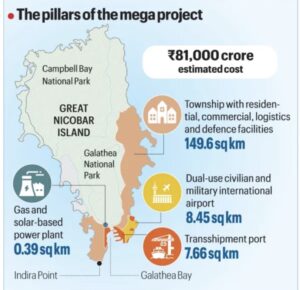
Credits : The Indian Express
Shompen Tribe
- The Shompen are a Particularly Vulnerable Tribal Group (PVTG) residing in the forests of Great Nicobar Island.
- They follow a semi-nomadic hunter-gatherer lifestyle and have minimal interaction with the outside world.