

Surge in Ship Traffic Across the Strait of Hormuz
Context
Ship traffic through the Strait of Hormuz has increased following diplomatic engagement between Iran and Oman to establish a Joint Hormuz Committee for improving maritime transit management and ensuring safe navigation after recent regional tensions.
- Surge in Ship Traffic Across the Strait of Hormuz: Iran and Oman have initiated a Joint Hormuz Committee to develop a framework for maritime navigation, safety and sovereignty issues in the Strait. Shipping agencies have reported a significant rise in vessel movements, particularly along the Omani shipping route.
- Proposed Maritime Framework: The proposed arrangement aims to facilitate safe passage through agreed transit rules and discussions on possible transit charges. However, Oman has expressed reservations regarding toll mechanisms, highlighting differing interpretations of navigation rights under international law.
- Strategic Importance: The Strait of Hormuz remains the world’s most critical energy chokepoint, carrying nearly one-fifth of global petroleum trade. Stability in the Strait is crucial for global energy security, India’s crude oil imports and international maritime trade.
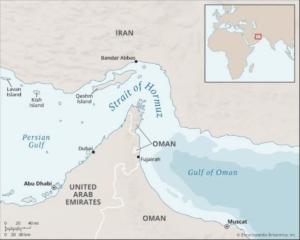
Strait of Hormuz
- The Strait of Hormuz is a narrow maritime passage connecting the Persian Gulf with the Gulf of Oman and the Arabian Sea.
- It is one of the world’s busiest oil and LNG shipping routes, making it a vital global energy chokepoint.
- The Strait is strategically important for Gulf energy exporters and major energy importers such as India, China, Japan and European countries.