


Siang Hydropower Project: Balancing Energy Security, Ecology and Community Consent
Context
Youth organisations in Arunachal Pradesh’s Siang region have opposed surveys related to the proposed Siang Upper Multipurpose Project, raising concerns over militarisation and inadequate community consultation. The project is being viewed both as an important energy initiative and as a strategic response to China’s Medog hydropower project on the Yarlung Tsangpo.
Key Highlights
- The NHPC is pursuing the Siang project with an estimated capacity of at least 11,000 MW.
- China is developing the much larger Medog hydropower project upstream on the Yarlung Tsangpo.
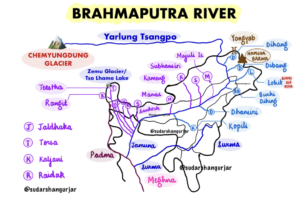
- The Yarlung Tsangpo enters Arunachal Pradesh as the Siang and later combines with the Dibang and Lohit rivers to form the Brahmaputra.
- Local groups have raised concerns regarding forest loss, seismic activity, landslide risks, displacement and possible impacts on the cultural landscape of the Adi community.
- Memoranda of support cannot replace free, informed and representative consultation with affected communities.
- Large reservoirs could contribute to flood moderation and strategic resilience, but the cumulative impacts of multiple projects across the basin require an independent assessment.
Key Concepts
- Cumulative Impact Assessment: An assessment of the combined environmental and social impacts of multiple projects operating within the same river basin.
- Environmental Flow: The quantity and timing of water required to maintain river ecosystems and sustain communities dependent on the river.
Way Forward
- Undertake transparent, basin-wide cumulative impact assessments along with detailed dam break studies.
- Make project designs, rehabilitation measures and other relevant information available in local languages.
- Ensure credible and meaningful community consultation and consent.
- Conduct an independent assessment of seismic and geological risks.
- Strengthen India China mechanisms for sharing hydrological data and establish safeguards for transboundary river management.