


Why is Buxa Bringing Tigers Back?
Context
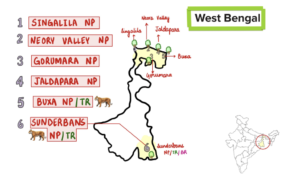
The Buxa Tiger Reserve in West Bengal has initiated a phased tiger reintroduction programme after witnessing a prolonged absence of a stable resident tiger population. As part of the initiative, a three year old tigress was brought from Valmiki Tiger Reserve in Bihar, with plans to introduce more tigers in the future.
Key Highlights
- Buxa was selected due to its ecological suitability, connectivity with Bhutan and proximity to other tiger habitats, creating favourable conditions for establishing a viable tiger population.
- Tigers are being sourced from Valmiki Tiger Reserve, as its habitat and terrain are considered sufficiently comparable to those of Buxa. This can help reduce the risks associated with translocating animals between significantly different ecological settings.
- The released tigress is initially being kept in an acclimatisation enclosure. Her health and behaviour will be assessed through telemetry, camera traps and field based monitoring.
- Buxa faces challenges such as habitat degradation, fragmentation, human settlements, livestock pressure and infrastructure related threats, which may influence the success of the reintroduction programme.
- Tiger reintroduction efforts across India have produced varied results, demonstrating that simply releasing animals is not enough. Long term success also requires adequate prey availability, habitat restoration, protection and continuous monitoring.
Way Forward
Tiger reintroduction should be supported by habitat restoration, improvement of prey populations, protection of wildlife corridors, community participation and rigorous post release monitoring. These measures are essential for establishing a stable and self sustaining tiger population in Buxa.