


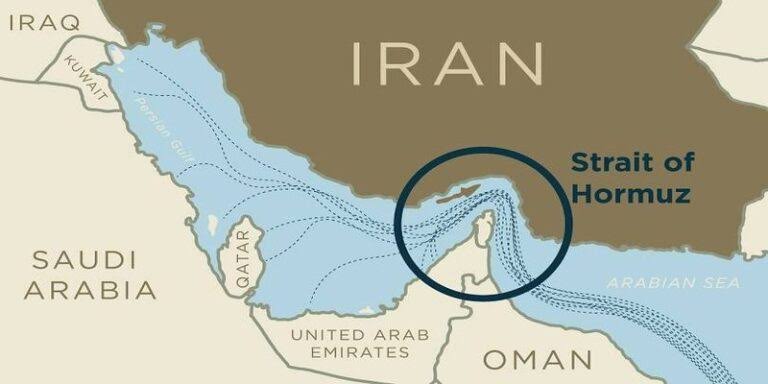
Iran and the Strait of Hormuz
Context
Iran attacked the Taiwan-linked container ship “Ever Lovely” in the Strait of Hormuz and reasserted a claim to control shipping through the strait, prompting the IMO to pause an evacuation plan for stranded vessels.
Key Facts
- ~500 ships were in the area at the time.
- Iran insists the strait should be governed jointly by Iran and Oman, rejecting an IMO/GCC/US framework.
- GCC and US jointly demanded “free, unconditional, unrestricted navigation” with no tolls.
Geography
- Strait of Hormuz: narrow waterway between Iran (north) and Oman (south), connecting the Persian Gulf to the Gulf of Oman.
- World’s most important oil chokepoint : ~20% of global oil passes through it.
- 2024 daily average volumes: 20.3 million barrels of oil/petroleum products; 290 million cubic metres of LNG.
- 30% of global seaborne oil trade and 20% of global LNG trade pass through here.
- Saudi Arabia = largest oil exporter via the strait; Qatar leads in LNG exports via the strait.
- Flow split: 80% of LNG through the strait goes to Asia, 20% to Europe.
- IMO (International Maritime Organization) — UN agency for shipping safety and marine pollution, headquartered in London.
Way Forward
- Any disruption at Hormuz triggers a spike in global oil prices and directly threatens India, which sources a large share of its crude through this chokepoint.
- Underscores the case for diversified energy sourcing and strategic petroleum reserves (SPR).
Exam-Useful Terms
| Term | Meaning |
|---|---|
| Chokepoint | A narrow maritime passage critical to global trade flow (e.g., Hormuz, Malacca, Bab-el-Mandeb, Suez) |
| IMO | International Maritime Organization, UN agency, HQ London |
| Strategic Petroleum Reserve (SPR) | Emergency crude oil stockpile to cushion supply shocks |