


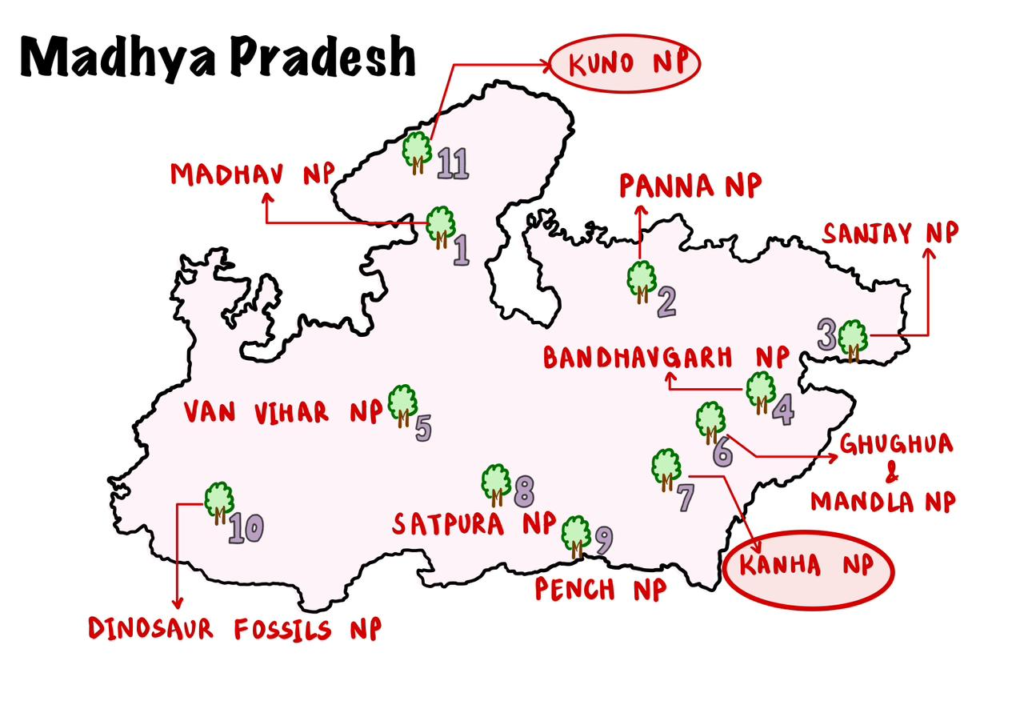
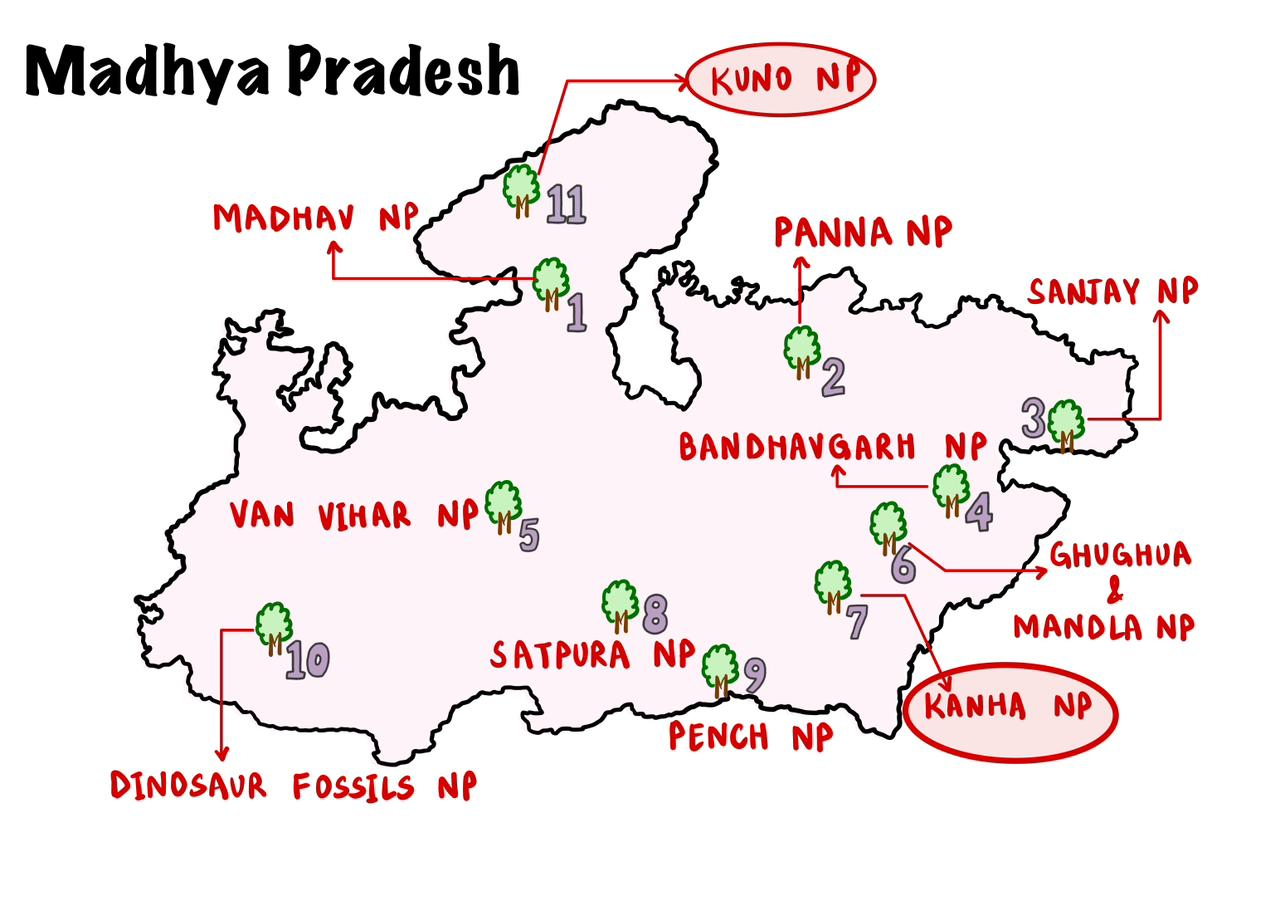
Kuno National Park
Kuno National Park is a strategically important protected area in India and the country’s first designated site for cheetah reintroduction. It plays a key role in wildlife conservation and global biodiversity restoration by facilitating the return of cheetahs to India after their extinction in the wild.
Location
- Located in the state of Madhya Pradesh.
- The national park covers an area of about 748 sq. km, forming the core of the larger 1,235 sq. km Kuno Wildlife Division.
Historical Background and Conservation Initiatives
- Historically, the region supported rich wildlife populations. Historical records indicate that Mughal emperor Akbar captured elephants in this area in 1564, while Asiatic lions persisted until the last recorded lion was hunted near Guna in 1872.
- In the early 20th century, Madhavrao Scindia attempted to establish a lion population by introducing lions from Ethiopia, but the effort was unsuccessful.
- Under Project Cheetah, Kuno became India’s first cheetah reintroduction site, receiving cheetahs from Namibia (2022), South Africa (2023), and Botswana (2026).
Key Ecological Features
- Kuno River traverses the park, serving as a vital source of water and sustaining diverse wildlife habitats.
- Suitable Cheetah Habitat: Extensive grasslands and savanna-like landscapes provide favourable conditions for fast-moving predators such as cheetahs.
- Dry Deciduous Forests: The park is dominated by drought-resistant species such as Kardhai, Khair and Salai, characteristic of central Indian dry deciduous forests.
- Rich Biodiversity
Significance
- Flagship Site for Project Cheetah: Kuno serves as the primary landscape for assessing the long-term success of cheetah reintroduction and conservation in India.
- Potential Alternate Habitat for Asiatic Lions: The area was originally developed as a prospective second home for Asiatic lions, enhancing its strategic importance for big-cat conservation.
- Biodiversity Conservation: The park contributes significantly to ecosystem restoration, wildlife management, and the conservation of endangered species in central India.