


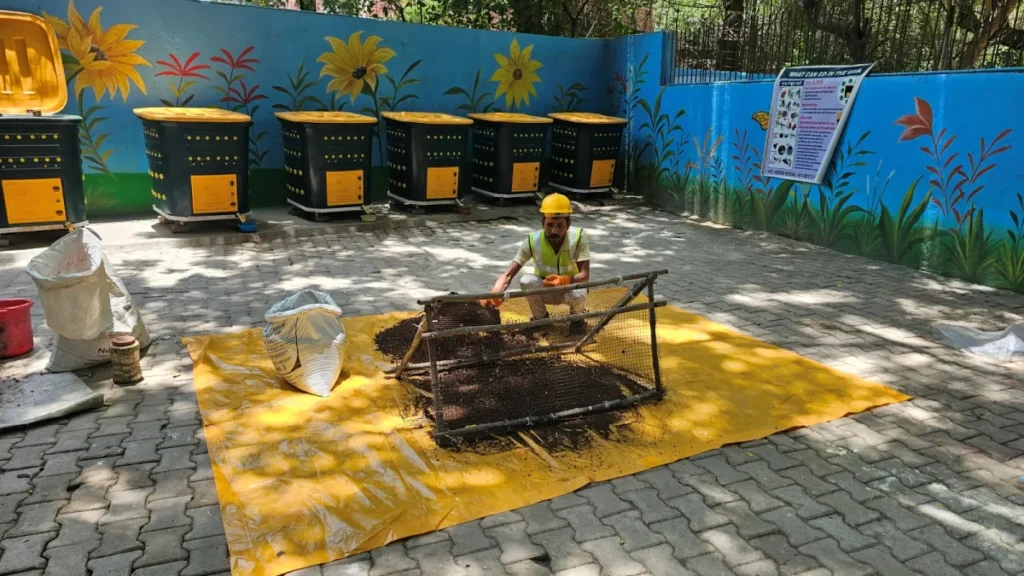
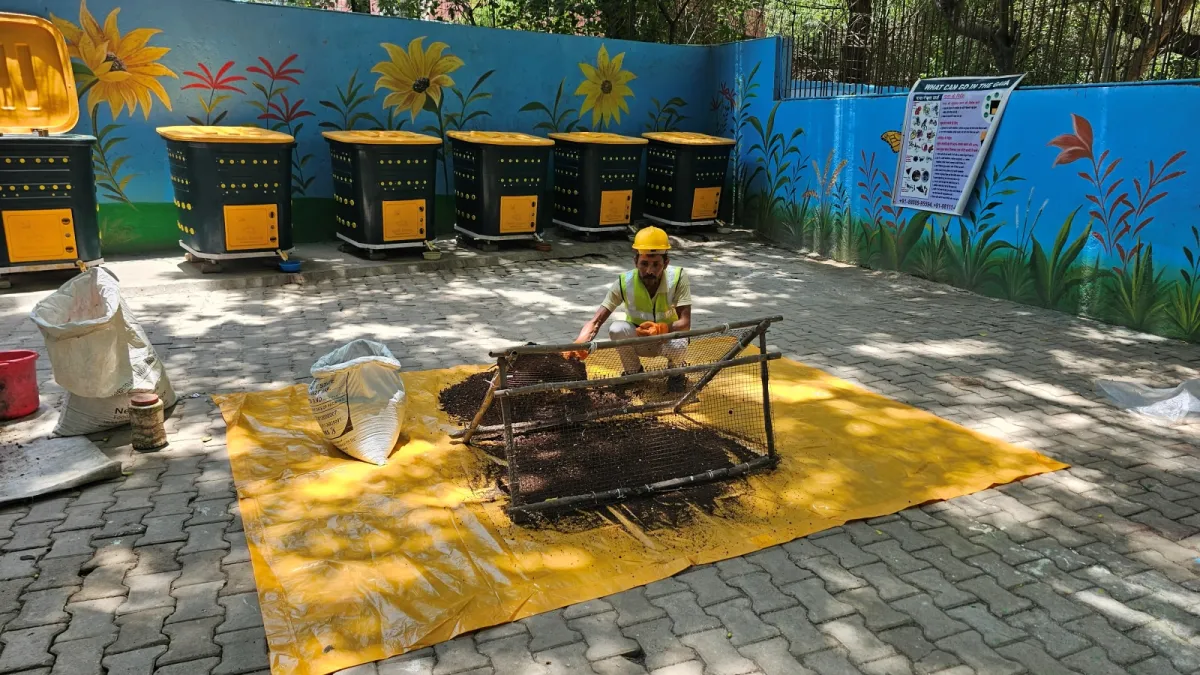
10 lakh kg waste processed in 8 years
Context : A residential colony in Navjeevan Vihar, Delhi, has processed over 10 lakh kg of waste in eight years by adopting a community-led zero-waste model, highlighting the role of waste segregation and decentralized waste management.
- Navjeevan Vihar (Delhi) has around 280 households following a zero-waste model.
- The initiative began in 2017 following the implementation of Solid Waste Management Rules by the Municipal Corporation of Delhi (MCD).
- Residents segregate waste into wet, dry, and hazardous waste at the household level. Wet waste is composted within the colony.
- Dry waste is sent to an RRR (Reduce-Reuse-Recycle) Centre for recycling.
- The colony reportedly diverts over 250-275 kg of waste daily from landfills.
- The remaining 120-125 kg mainly comprises sanitary and hazardous waste.
- Compost produced is reused in the colony’s green spaces.
- The initiative also introduced biodegradable sanitary napkins and awareness campaigns involving children and domestic workers.
Solid Waste Management Rules, 2016 mandate source segregation of waste into biodegradable, non-biodegradable, and domestic hazardous waste and promote decentralized waste processing.
Significance
- Demonstrates the effectiveness of decentralized solid waste management at the community level.
- Reduces dependence on landfills, thereby lowering methane emissions and environmental pollution.
- Promotes the principles of the circular economy through composting and recycling.
- Highlights the importance of community ownership in achieving sustainable waste management.
Challenges
- Sustaining daily waste segregation behaviour among residents.
- Initial resistance from domestic workers and nearby residents.
- Limited scalability in lower-income neighbourhoods due to infrastructure constraints.
- Need for sustained institutional support from urban local bodies.
Way Forward
- Strengthen awareness and behavioural change campaigns.
- Improve access to decentralized composting and recycling infrastructure.
- Encourage Resident Welfare Associations (RWAs) to adopt similar models with municipal support.
- Integrate community participation with local government initiatives for long-term waste management.