


Ecological concerns as city runs out of space to dispose rain silt
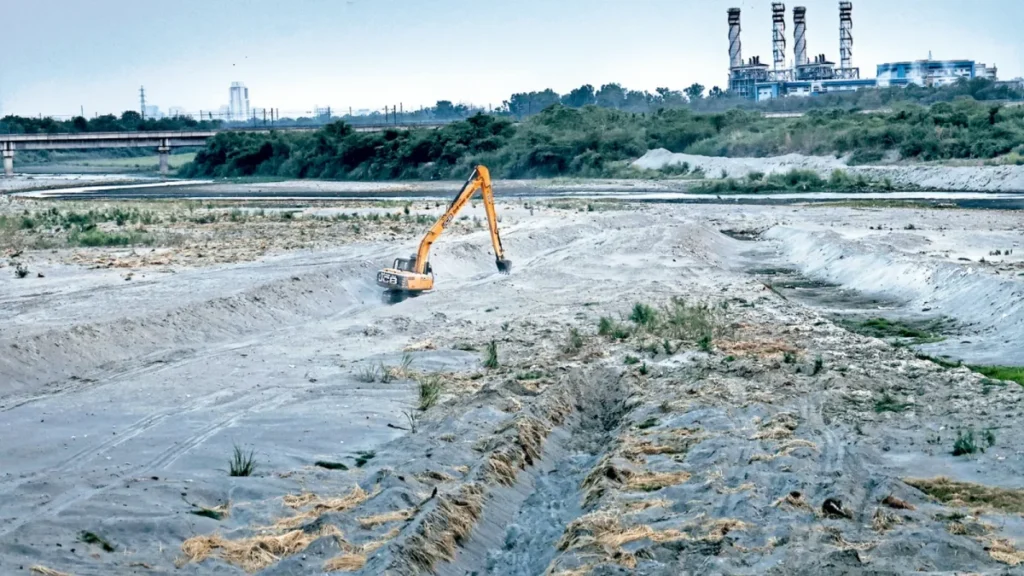
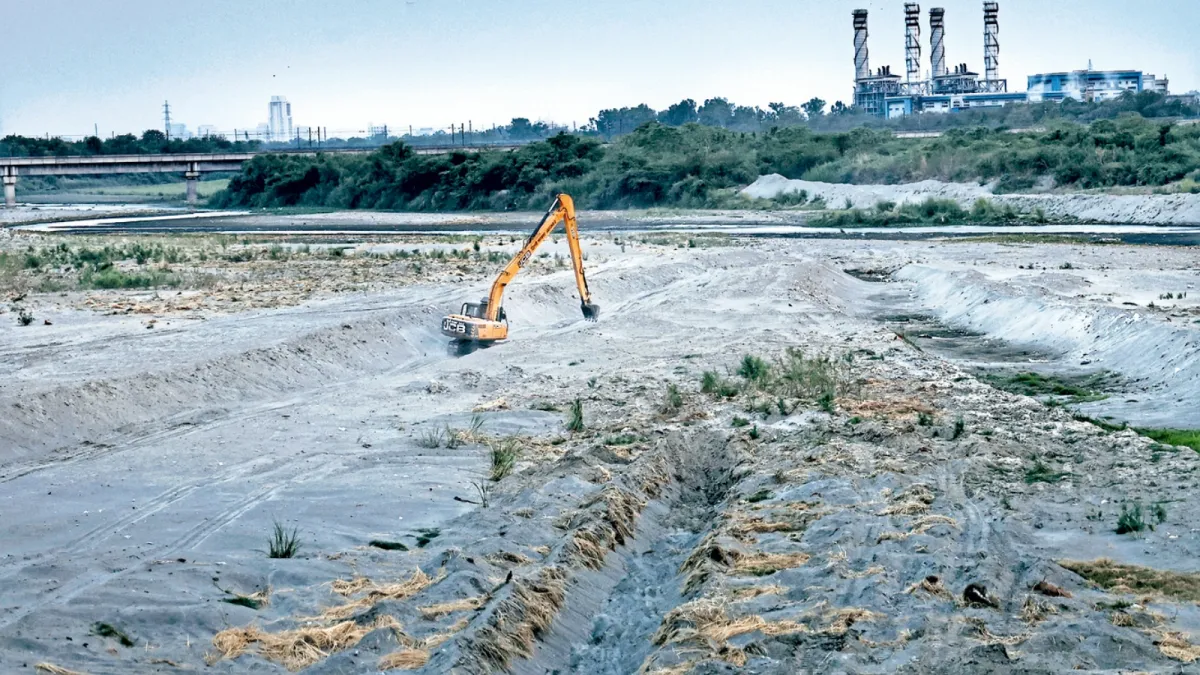
Context : Ahead of the monsoon, Delhi has intensified desilting of drains to improve drainage and reduce urban flooding. However, the city is facing a growing challenge in the scientific disposal and reuse of drain silt, much of which is contaminated with municipal waste.
Prelims:
- The Irrigation and Flood Control (I&FC) Department manages 77 drains, including 22 drains that outfall into the Yamuna River.
- The department has removed 30.91 lakh metric tonnes (MT) of silt this year, compared to about 19 lakh MT last year.
- Around 25 mixed-flow drains carrying both stormwater and sewage generate nearly 3.5 lakh MT of silt.
- The Public Works Department (PWD) has desilted 1,900.15 km of drains, nearly 90% of its target.
- Najafgarh Drain accounts for the largest share of desilting, with 12.7 lakh MT of silt removed.
- Landfills and low-lying disposal sites have reached saturation, making conventional disposal increasingly difficult.
- The I&FC Department has invited Expressions of Interest (EOIs) for bio-mining, bioremediation, scientific disposal, processing, and reuse of dredged silt.
- The implementation plan is being prepared in accordance with norms prescribed by:
* Central Pollution Control Board (CPCB)
* Delhi Pollution Control Committee (DPCC)
* National Green Tribunal (NGT)
- Bioremediation uses living organisms to remove pollutants from contaminated soil or water, while bio-mining recovers useful materials from legacy waste through biological and mechanical processes.
Significance
- Highlights the environmental challenge of scientific management of contaminated drain silt in rapidly urbanising cities.
- Demonstrates the importance of regular desilting for urban flood mitigation and improved drainage.
- Emphasises the need for resource recovery and reuse instead of landfill-based disposal.
Challenges
- Drain silt is mixed with municipal solid waste, sewage and other contaminants, complicating its disposal.
- Existing landfills and disposal sites have reached saturation.
- Conventional disposal methods are environmentally unsustainable in the long run.
- Scientific characterisation, treatment and reuse mechanisms remain inadequate.
Way Forward
- Adopt scientific processing and utilisation of dredged silt.
- Scale up bio-mining and bioremediation techniques.
- Ensure compliance with CPCB, DPCC and NGT guidelines.
- Prepare drain-wise and zone-wise action plans, prioritising critical and flood-prone drains.