


Flying Butterflies Use Wing Patterns to Confuse Predators
CONTEXT
- Researchers studying high-speed footage of butterflies found that their wing patterns and contrasting colours can function as visual defence mechanisms.
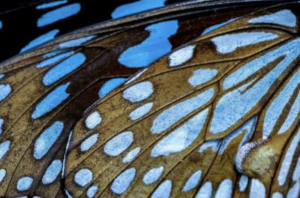
Fig. : Patterns on the butterfly wings
- These features may confuse predators and interfere with their ability to accurately judge the butterfly’s movement, direction and speed.
KEY HIGHLIGHTS
- Butterfly wings exhibit diverse patterns, stripes and bright edges that may serve purposes beyond attraction or camouflage and can also act as defensive adaptations.
- High-speed video analysis indicates that wing movement combined with contrasting visual patterns can disrupt predator tracking, making it difficult to estimate the insect’s speed and direction accurately.
- Such adaptations can lower the likelihood of successful predation by interfering with the predator’s visual tracking and targeting abilities.
- The findings illustrate how natural selection can favour physical traits that improve survival by influencing the sensory perception and decision-making of predators.
- The study provides insights into anti-predator adaptations and highlights that biodiversity encompasses not only species diversity but also complex behavioural and evolutionary interactions within ecosystems.
WAY FORWARD
- Greater research into species behaviour and ecological interactions can strengthen biodiversity conservation.
- Understanding how seemingly ornamental traits contribute to survival can provide deeper insights into evolution, adaptation and ecosystem functioning.