


African Grey Foam-Nest Tree Frog (Chiromantis xerampelina)
Context:
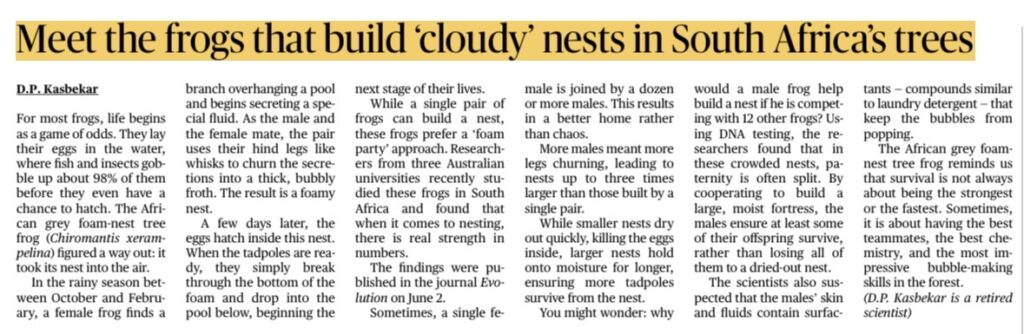
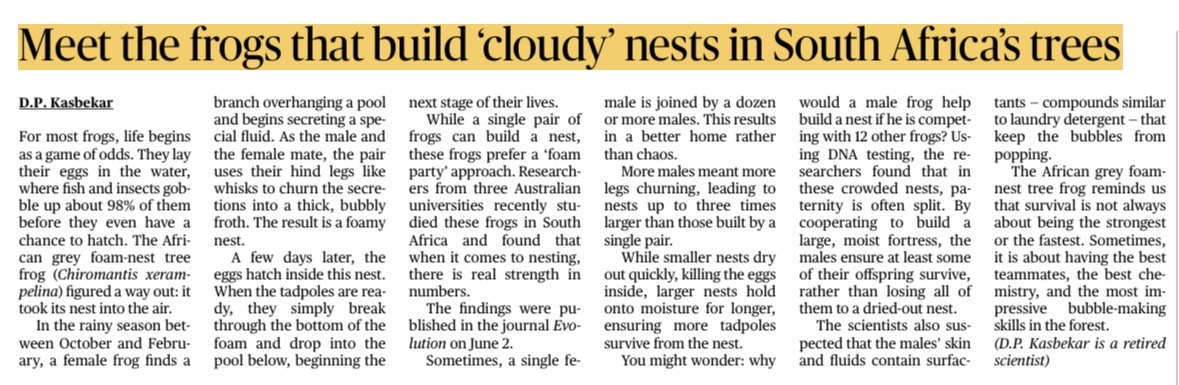
Researchers have recently documented the remarkable nesting behaviour of the African Grey Foam-Nest Tree Frog. The species constructs specialized foam nests on vegetation above water bodies, significantly improving the survival chances of its eggs and offspring.
Prelims:
- Scientific Name: Chiromantis xerampelina.
- Common Name: African Grey Foam-Nest Tree Frog.
- Distribution: Widely found across Sub-Saharan Africa, including South Africa, Botswana, Zimbabwe, Mozambique, and neighboring regions.
- Order: Anura.
- Unique Nesting Behaviour: Unlike many amphibians that lay eggs directly in water, females produce thick foam nests on branches or leaves hanging above ponds and wetlands.
- Protective Foam Layer: The foam helps prevent dehydration, shields eggs from predators, and protects developing embryos from environmental fluctuations.
- Ecological Importance: Amphibians are considered important bioindicators because their permeable skin makes them highly sensitive to environmental changes and pollution.
Mains:
- Represents a notable example of evolutionary adaptation for reproductive success.
- Highlights the ecological role of amphibians in maintaining food webs and ecosystem balance.
- Emphasizes the importance of conserving wetlands and freshwater habitats that support amphibian diversity.