


The key hurdle to climate targets : Electrification
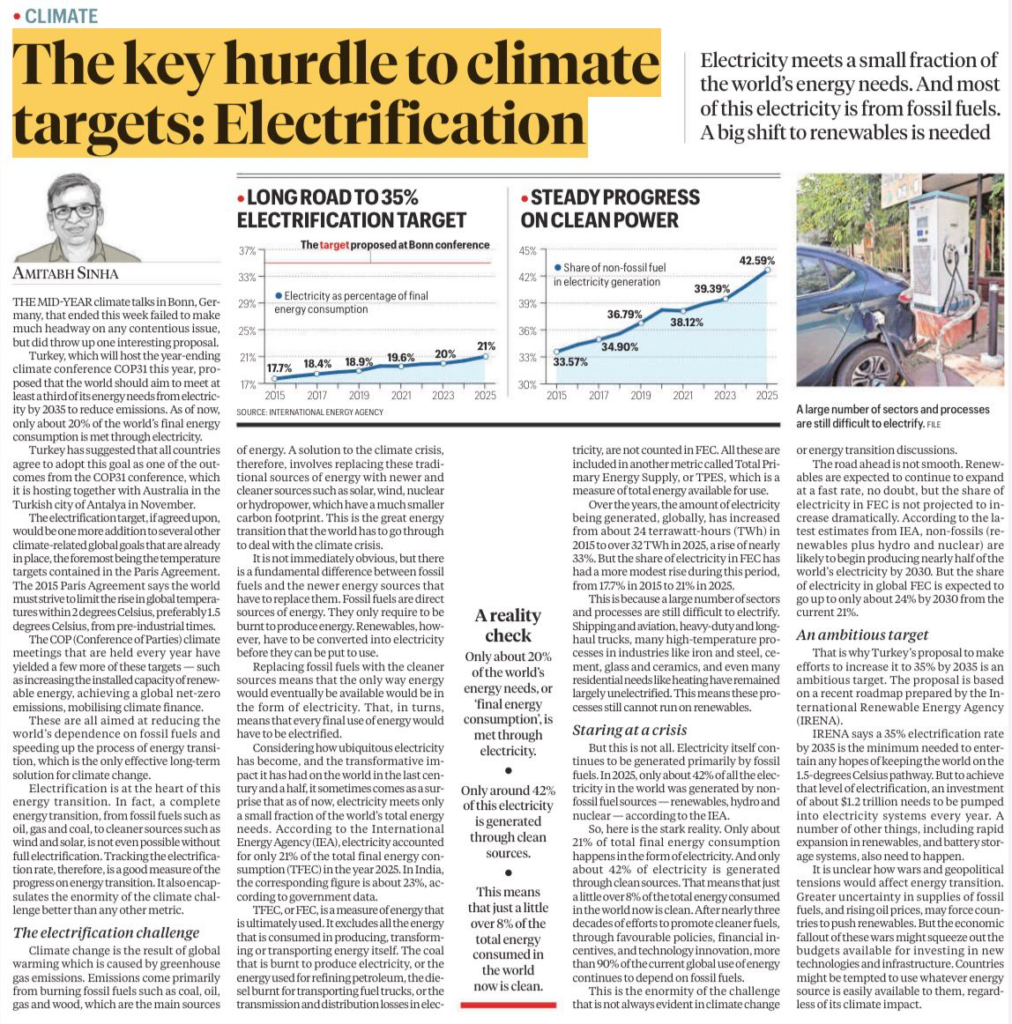
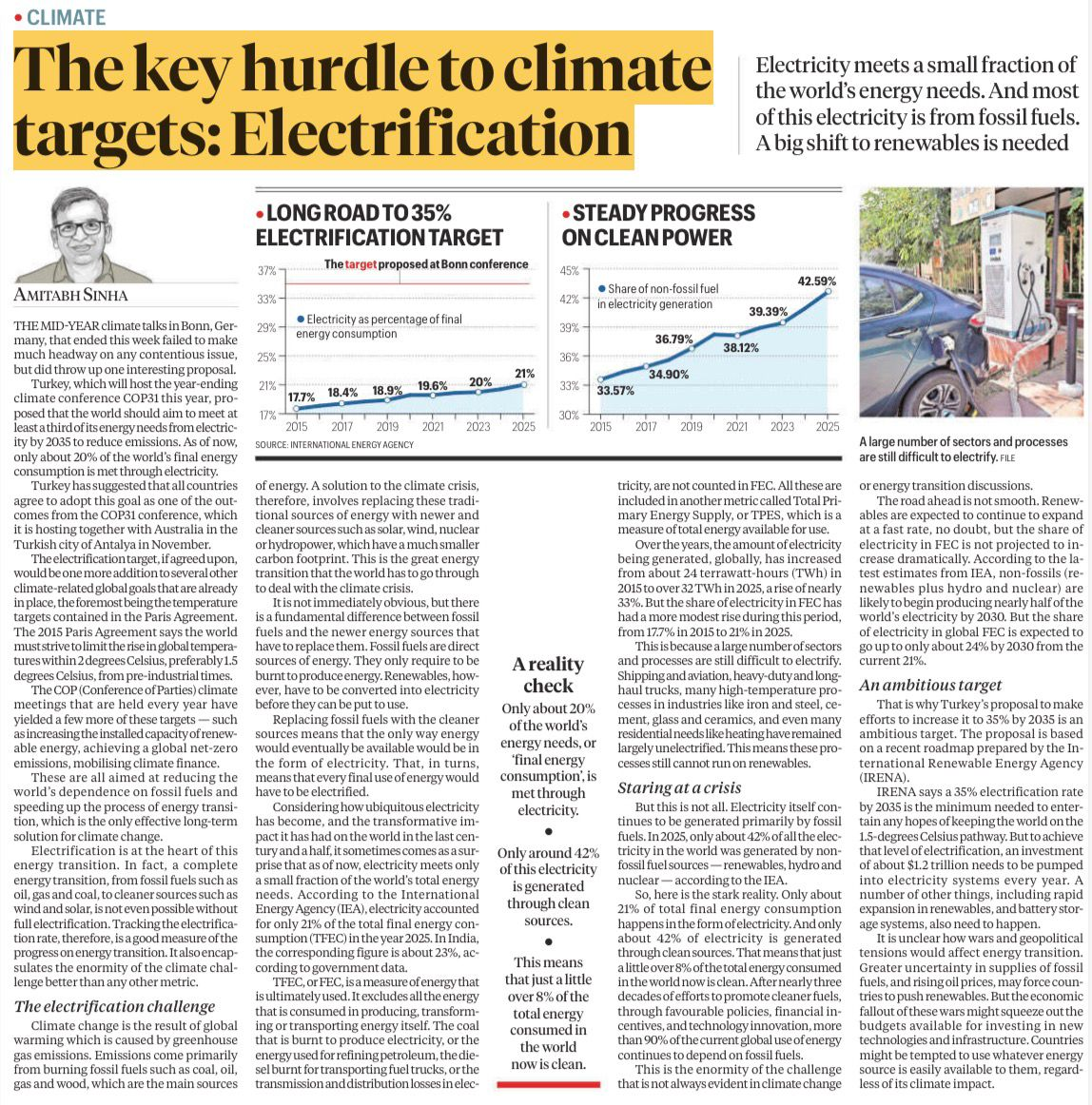
Context: Discussions at the mid-year UN climate talks in Bonn highlighted electrification as a critical component of global decarbonization efforts. Türkiye proposed a global target of achieving at least 35% electrification of final energy consumption by 2035 to accelerate climate action.
Prelims :
- Electrification refers to replacing direct fossil fuel use with electricity in sectors such as transport, industry, buildings, and agriculture.
- It is considered a key strategy for reducing greenhouse gas emissions.
- The proposal for a 35% electrification target by 2035 was discussed during climate negotiations in Bonn, Germany.
- The target is based on a roadmap prepared by the International Renewable Energy Agency (IRENA).
- The Paris Agreement (2015) aims to limit global temperature rise to well below 2°C and preferably to 1.5°C above pre-industrial levels.
Current Status of Global Electrification
- Electricity currently accounts for only about 21% of global final energy consumption (2025).
- The share has increased only gradually
- Despite rapid technological advances, most global energy demand is still met through direct consumption of fossil fuels.
Growth in Clean Electricity
- The share of non-fossil fuel sources in electricity generation has increased steadily.
- Renewable energy, hydropower, and nuclear power are increasingly contributing to electricity generation.
Why Electrification Matters
- Climate change is primarily driven by greenhouse gas emissions from burning coal, oil, and natural gas.
- Electrification allows fossil-fuel-based activities to be replaced by cleaner energy sources.
- When electricity is generated from renewable or low-carbon sources, overall emissions decline significantly.
- It is considered one of the most effective pathways for achieving long-term decarbonization.
Major Challenges
Hard-to-Electrify Sectors
Several sectors remain difficult to electrify, including:
- Aviation
- Shipping
- Heavy-duty freight transport
- Iron and steel production
- Cement manufacturing
- Ceramics and other high-temperature industrial processes
- Certain residential and commercial heating applications
Dependence on Fossil Fuels
- Around 42% of global electricity generation currently comes from clean sources.
- However, because electricity accounts for only about 21% of final energy use, clean energy effectively meets only a small share of total global energy demand.
- More than 90% of global energy consumption still depends on fossil fuels.
Key Concepts
Final Energy Consumption (FEC):
- Refers to energy directly consumed by end users.
- Excludes energy used during production, conversion, transmission, and distribution processes.
Total Primary Energy Supply (TPES):
- Represents the total amount of energy available for use within an economy before conversion and distribution losses.
Future Outlook
- IRENA estimates that achieving a 35% electrification rate by 2035 is essential for keeping the 1.5°C climate target within reach.
- Achieving this goal would require investments of approximately $1.2 trillion in electricity systems.
- Large-scale expansion of:
- Renewable energy generation,
- Electricity grids,
- Battery storage systems,
- Electric mobility,
- Clean industrial technologies,
- will be necessary.
Mains Value Addition
Significance of Electrification
- Accelerates the transition away from fossil fuels.
- Supports achievement of Paris Agreement targets.
- Enhances energy security through greater use of domestic renewable resources.
- Reduces air pollution and associated health impacts.
- Promotes sustainable industrial and transport systems.
Challenges to Achieving Climate Targets
- Slow pace of electrification in key sectors.
- High investment requirements.
- Grid modernization and storage constraints.
- Geopolitical tensions affecting energy markets.
- Continued dependence on coal, oil, and natural gas in many economies.
Electrification is emerging as a cornerstone of global climate strategy. However, achieving meaningful emission reductions will require not only cleaner electricity generation but also a rapid expansion of electricity use across sectors that currently depend heavily on fossil fuels