


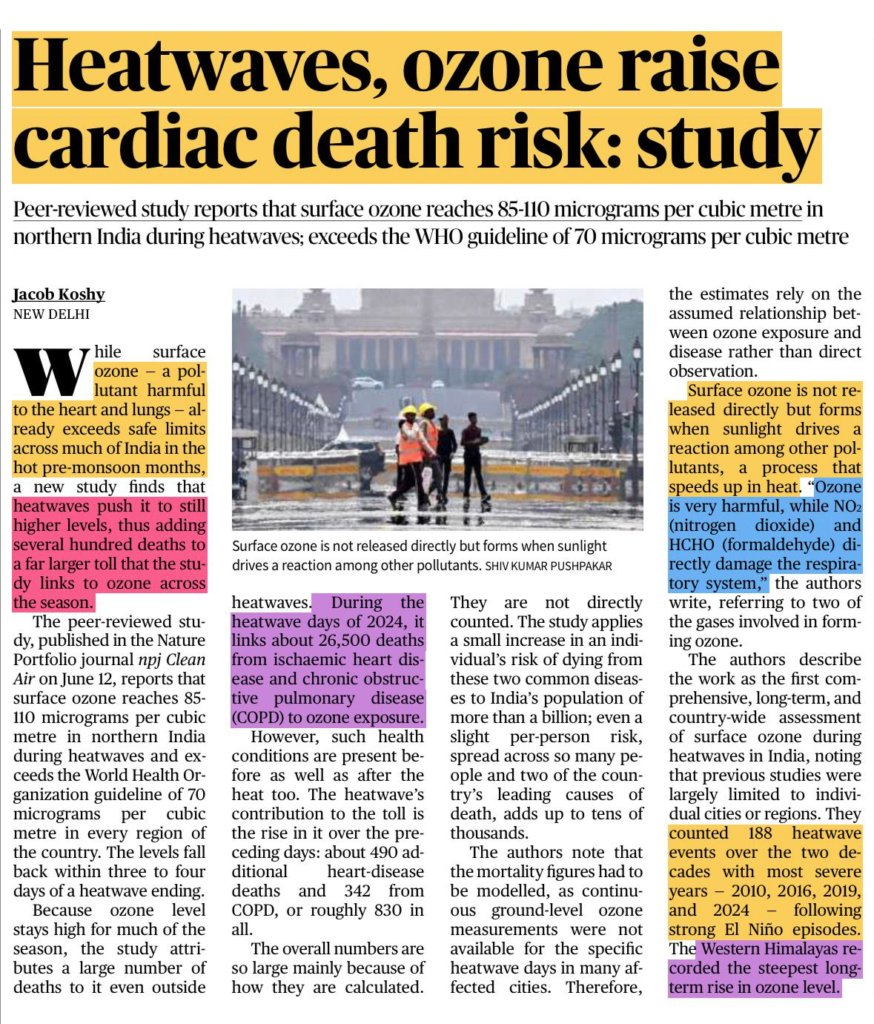
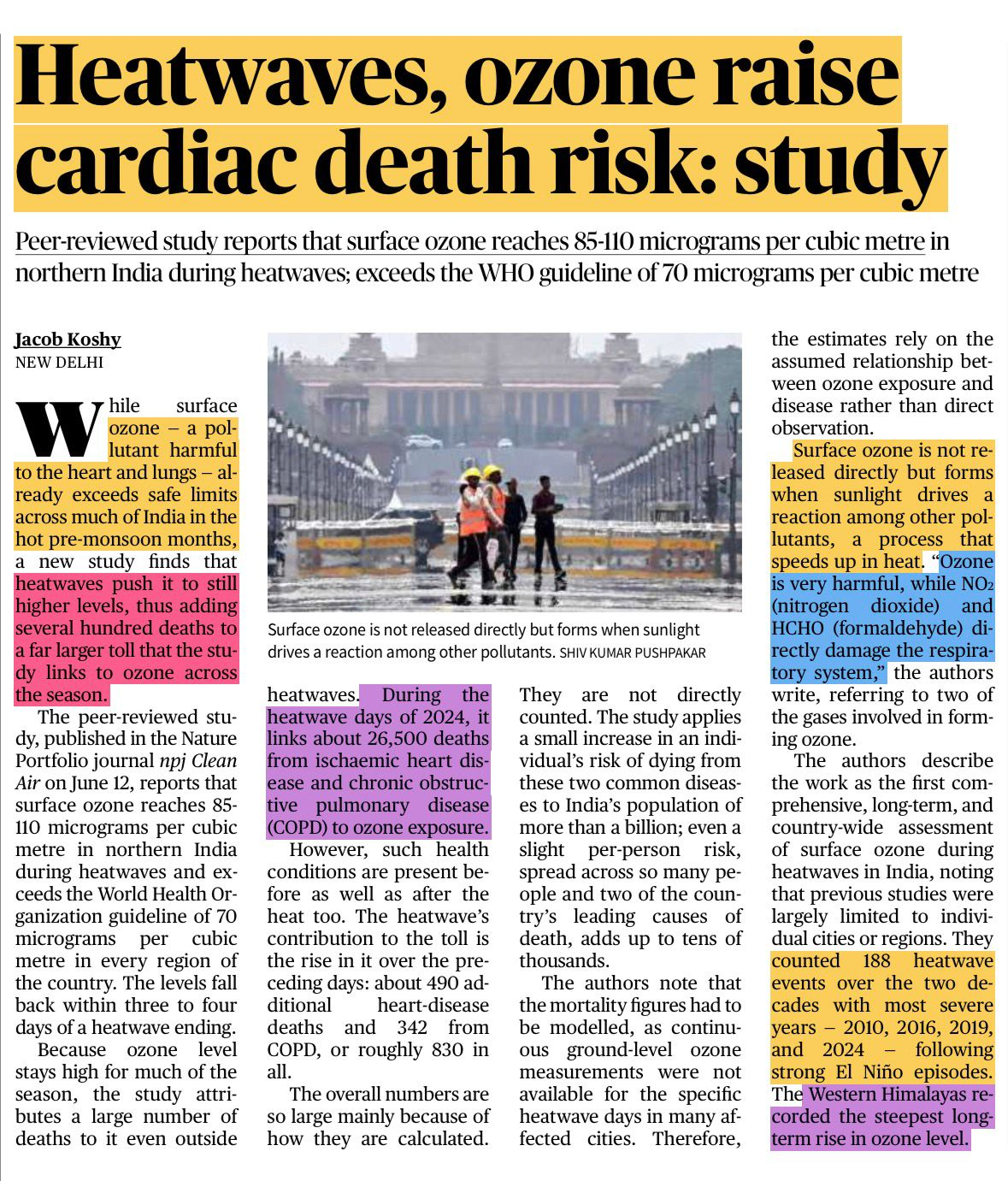
Heatwaves, ozone raise cardiac death risk
Context : The study finds that heatwaves substantially elevate surface ozone levels beyond WHO limits, increasing cardiovascular and respiratory mortality risks and highlighting the need for stronger air-quality monitoring and heat-health preparedness.
Prelims :
- During heatwaves, surface ozone in northern India reached 85–110 µg/m³.
- These levels exceed the WHO guideline of 70 µg/m³. Surface ozone levels generally decline within 3–4 days after a heatwave ends. It is not emitted directly into the atmosphere.
- It forms when sunlight triggers reactions among other pollutants, and this process accelerates during hot weather.
- The study linked 26,500 deaths in 2024 from ischaemic heart disease and COPD to ozone exposure.
- The additional mortality attributable to heatwave-driven ozone increases was estimated at about 490 heart disease deaths and 342 COPD deaths (around 830 deaths in total).
- Mortality estimates were modelled because continuous ground-level ozone measurements were unavailable in many cities.
- The study identified 188 heatwave events over the past two decades with most severe heatwave years were 2010, 2016, 2019 and 2024.
- These severe heatwave years followed strong El Niño episodes.
- The study notes that ozone directly harms the heart and lungs.
- The authors also noted that NO₂ (nitrogen dioxide) and HCHO (formaldehyde) directly damage the respiratory system.
- The Western Himalayas recorded the steepest long-term rise in ozone levels.
Mains :
1. Heatwaves and Air Pollution
- Heatwaves intensify photochemical reactions, leading to higher surface ozone formation.
- Rising temperatures can worsen air quality during pre-monsoon months.
2. Public Health Concerns
- Elevated ozone exposure increases the risk of cardiovascular and respiratory mortality.
- Heatwave-induced ozone spikes can significantly raise disease burdens.
3. Monitoring and Data Gaps
- Limited ground-level ozone monitoring necessitated the use of modelled mortality estimates.
- Strengthening air-quality monitoring systems is essential for accurate risk assessment.
4. Climate Linkages
- Strong El Niño years coincided with some of India’s most severe heatwaves.
- The Western Himalayas have experienced the sharpest long-term increase in ozone levels.