


The giant world of fungi
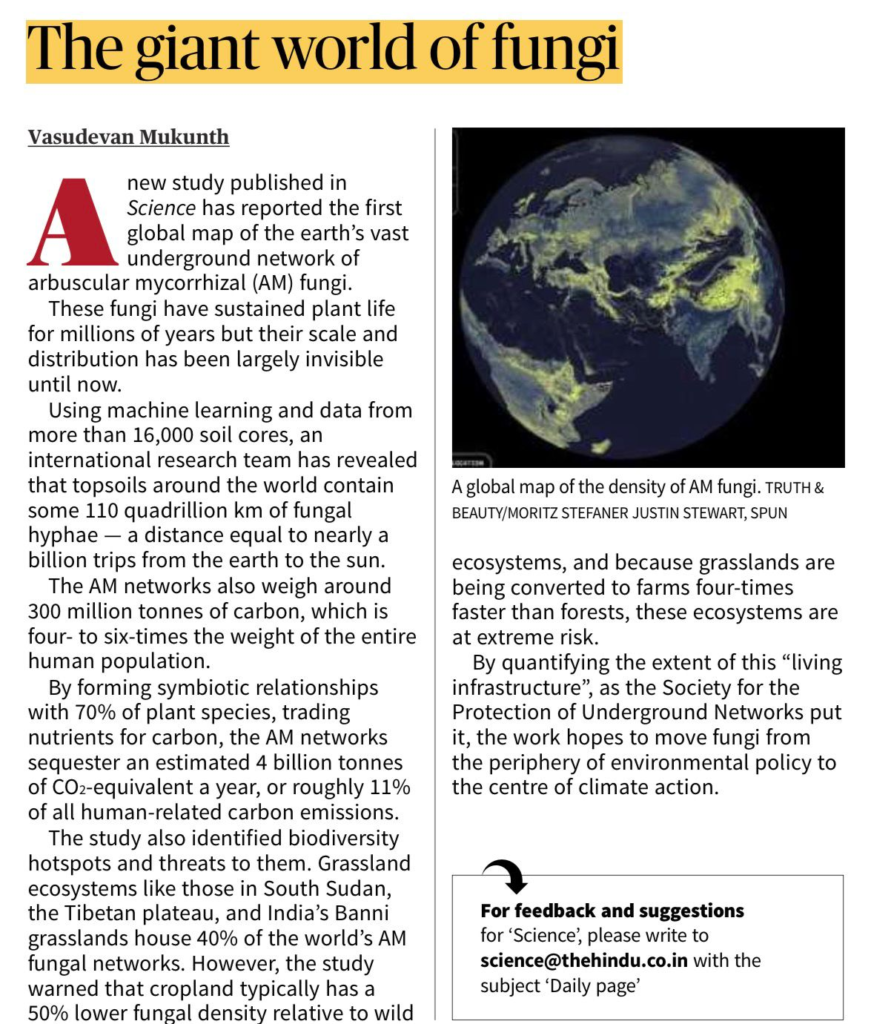
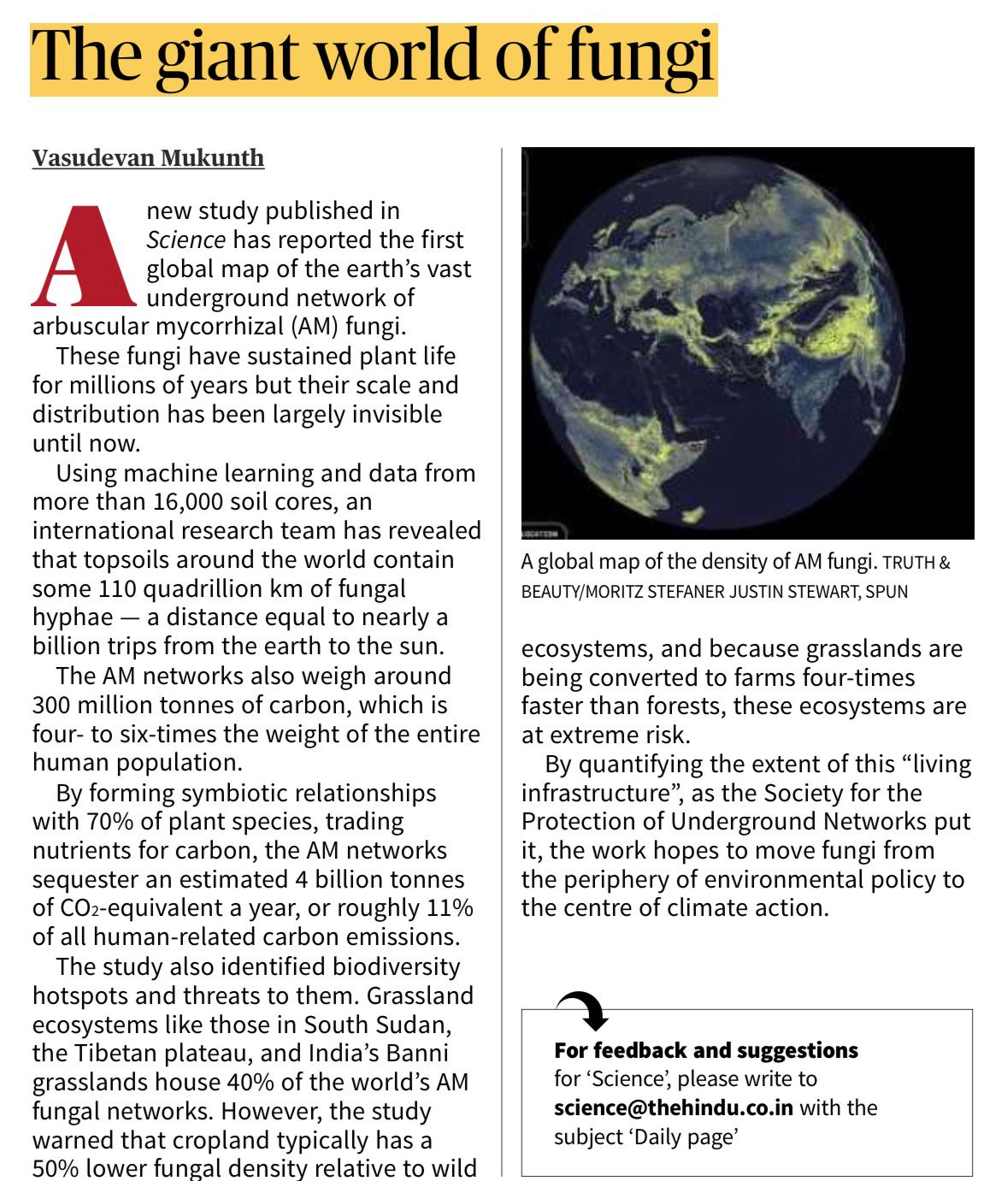
Context : A study published in Science produced the first global map of underground arbuscular mycorrhizal (AM) fungi networks.
Prelims :
- AM fungi have supported plant life for millions of years. The study analysed data from more than 16,000 soil cores using machine learning.
- Topsoils worldwide contain an estimated 110 quadrillion km of fungal hyphae.
- The AM fungal network stores around 300 million tonnes of carbon.
- This carbon mass is estimated to be four to six times the weight of the entire human population.
- AM fungi form symbiotic relationships with about 70% of plant species. They exchange soil nutrients for carbon obtained from plants.
- AM networks sequester an estimated 4 billion tonnes of CO₂-equivalent annually. This equals roughly 11% of all human-related carbon emissions.
- Grasslands in South Sudan, the Tibetan Plateau and India’s Banni grasslands contain around 40% of the world’s AM fungal networks.
- Croplands have about 50% lower fungal density than wild ecosystems. Grasslands are being converted to farms four times faster than forests.
- The Society for the Protection of Underground Networks (SPUN) described these fungal systems as a form of “living infrastructure.”
Mains:
1. Ecological Importance
- AM fungi play a vital role in sustaining plant life through nutrient exchange.
- They support ecosystem functioning through symbiotic relationships with plants.
2. Carbon Sequestration
- AM fungal networks act as major carbon sinks.
- They sequester significant amounts of CO₂ equivalent annually.
3. Threats to Fungal Networks
- Conversion of grasslands into agricultural land threatens fungal biodiversity.
- Croplands support lower fungal densities than natural ecosystems.
4. Conservation Significance
- The study identifies global hotspots of AM fungal diversity.
- It argues that fungi should move from the margins of environmental policy to the centre of climate action.